
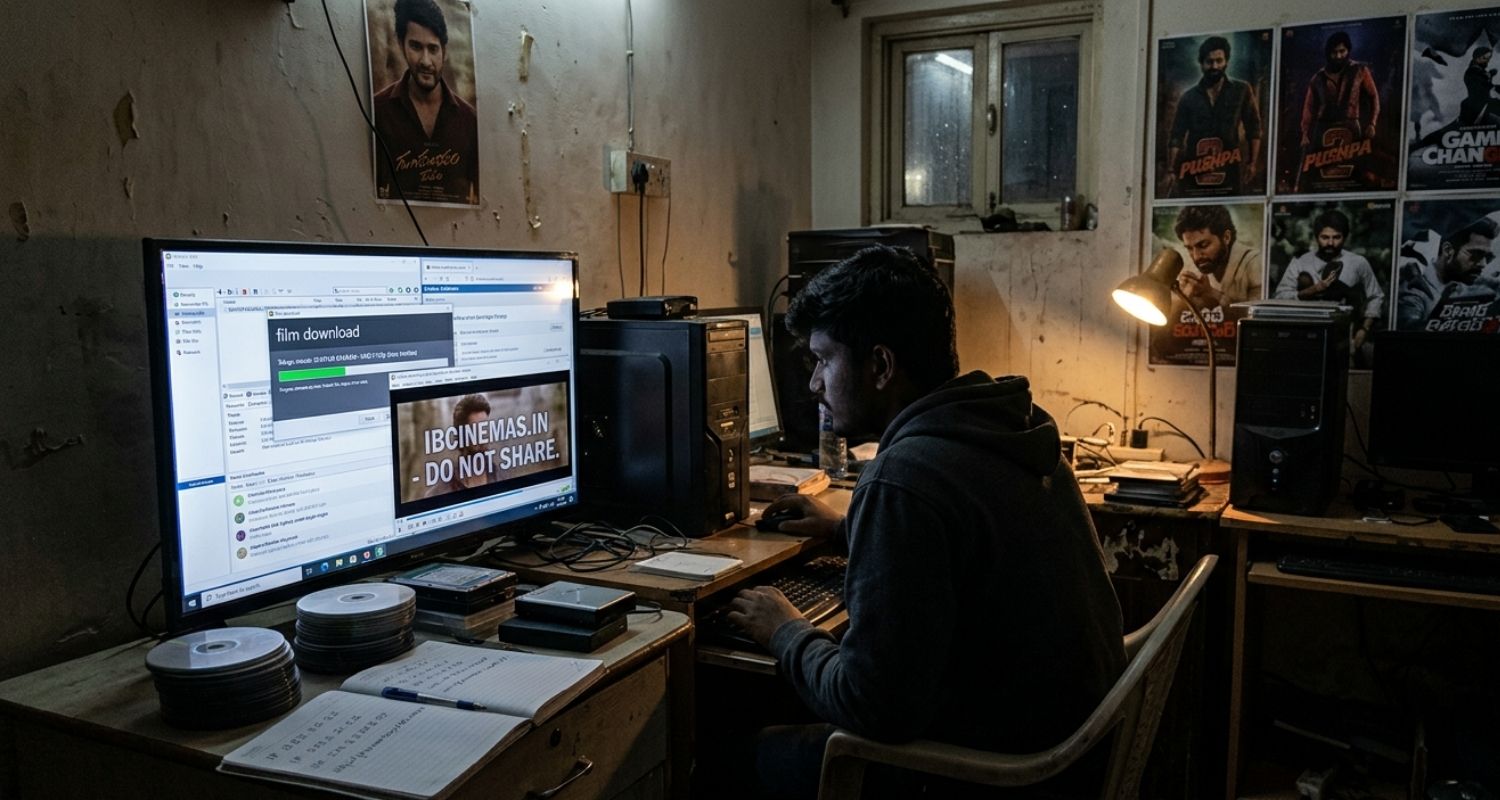
The Telugu movie business, which has been reeling below the piracy risk, has now were given a Usual Working Process (SOP) for investigation of anti-piracy circumstances. The SOP is designed to toughen enforcement in opposition to virtual movie piracy and determine a structured framework for investigation, virtual proof assortment, and coordinated motion in opposition to piracy networks.
The SOP was once officially introduced in Hyderabad by way of Telangana Cyber Safety Bureau (TGCSB) in collaboration with the Telugu Movie Chamber of Trade (TFCC).
The anti-piracy unit of the TGCSB has additionally unveiled a brand new anti-piracy disclaimer to be displayed sooner than film screenings throughout theatres, geared toward growing consciousness amongst audiences concerning the felony penalties of movie piracy and cam-cording within cinema halls.
TGSCB director Shikha Goel, and TFCC president, Daggubati Suresh Babu, all through a stakeholder session assembly held to toughen cooperation between legislation enforcement companies and the movie ecosystem in addressing the rising problem of virtual piracy, introduced the 2 tasks.
All over the session, stakeholders deliberated at the scale and affect of piracy at the movie business. Business estimates point out that the Telugu movie business incurs losses of just about Rs 13,7OO crore once a year, whilst the Indian movie business loses over Rs 22,4OO crores because of piracy.
For Telugu movie manufacturers who spend years and crores growing movies, hiring loads of day-to-day salary employees, junior artists, and technicians, piracy isn’t just robbery—it’s a demise knell for the business. It’s not as regards to earnings losses however about overwhelmed desires, unpaid wages, and shuttered manufacturing properties.
Investigations have printed that piracy normally originates from two number one resources – leakage of HD high quality movie content material sooner than unencumber on the post-production or virtual carrier supplier stage, and cam-cording within theatres all through movie screenings, which accounts for almost all of piracy incidents.
In keeping with a learn about by way of the Web and Cell Affiliation of India (IAMAI and Ernst & Younger, pirated content material from film theatres by myself is round Rs 13,700 crore once a year, whilst Rs 8,700 crore is from piracy of OTT platform content material. A possible annual GST loss because of piracy may well be round Rs 4,300 crore. Just about 51 in line with cent of media shoppers reportedly get right of entry to content material from pirated resources. Streaming services and products are the biggest supply of pirated content material, accounting for 63 in line with cent, adopted by way of cell apps (16 in line with cent) and different resources like social media or torrents (21 in line with cent).
The newly introduced SOP supplies a complete investigative framework, outlining procedures for registration of FlRs below the related provisions of the Copyright Act, Cinematograph Act, and Knowledge Generation Act, forensic exam of pirated content material, identity of supply theatres thru watermarking and server information research, coordination with virtual carrier suppliers and business stakeholders, preservation of digital proof, and motion for blockading infringing URLs below the provisions of the IT Act.
The anti-piracy disclaimer will likely be displayed sooner than film screenings throughout theatres and included into screening programs by way of virtual carrier suppliers and exhibitors. The disclaimer warns audiences that movie piracy and unauthorized recording of movies is a punishable offence, wearing imprisonment of as much as 3 years and/or a high quality of as much as Rs 3 lakhs, or 5 p.c of the manufacturing price of the movie, and targets to behave as a robust deterrent in opposition to unlawful recording and distribution of movies.
The session additionally emphasized preventive measures around the movie distribution chain, together with protected dealing with and transmission of movie content material, limited get right of entry to thru permitted authentication methods, vigilance by way of exhibitors to stop cam-cording within cinema halls, retention of CCTV recordings for a minimum of one month after unencumber, and implementation of theatre-specific forensic watermarking to assist hint the supply of pirated copies.
Goel stated piracy has developed right into a extremely organised cybercrime ecosystem and calls for a coordinated reaction from each legislation enforcement and business stakeholders.
She emphasized that the brand new SOP will allow sooner and extra structured investigations, whilst the anti-piracy disclaimer will assist toughen public consciousness and deterrence in opposition to unlawful recording and distribution of movies.
Suresh Babu, highlighted the critical financial affect piracy has at the movie ecosystem and wired the significance of collective duty amongst all stakeholders excited by movie manufacturing, distribution, and exhibition. TFCC chairman anti video piracy cellular, chairman, Rajkumar Akella, emphasized the significance of robust coordination between the movie business and legislation enforcement companies to successfully take on piracy networks and famous that the SOP will assist beef up reaction time, investigation processes, and proof assortment in piracy circumstances.
For extra Read Now.
For More News updates : https://asiapedia.in