
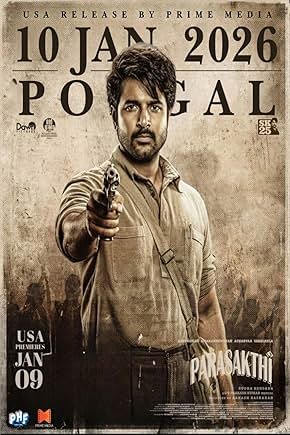
The release of Parasakthi has reignited discussions around censorship and creative freedom in Indian cinema. Directed by Sudha Kongara, the Tamil period political drama was released in theatres on January 10, 2026, and is set against the backdrop of the 1960 s Anti-Hindi Imposition movement in Tamil Nadu—a historically significant yet politically sensitive chapter.
Parasakthi: Political Cinema Under the Scanner

Ahead of its release, Parasakthi faced intense scrutiny from the Central Board of Film Certification (CBFC). The board reportedly demanded several cuts and modifications before granting the film a U/A certificate. These included muting or rephrasing dialogues critical of Hindi imposition, altering voice-overs, and trimming protest and violence sequences. Certain visuals depicting state repression and mass unrest were also reduced. While the film ultimately released on schedule, many critics and viewers felt that these changes softened its political edge and diluted its original intent.
The experience of Parasakthi, especially when viewed alongside the certification delays faced by Jana Nayagan, points to a broader pattern of heightened caution around politically themed cinema. Together, these cases have sparked renewed debate on where the line should be drawn between regulation and artistic expression. For many, Parasakthi stands as a reminder that telling uncomfortable historical truths on screen continues to come at a cost.
For More News updates : https://asiapedia.in