
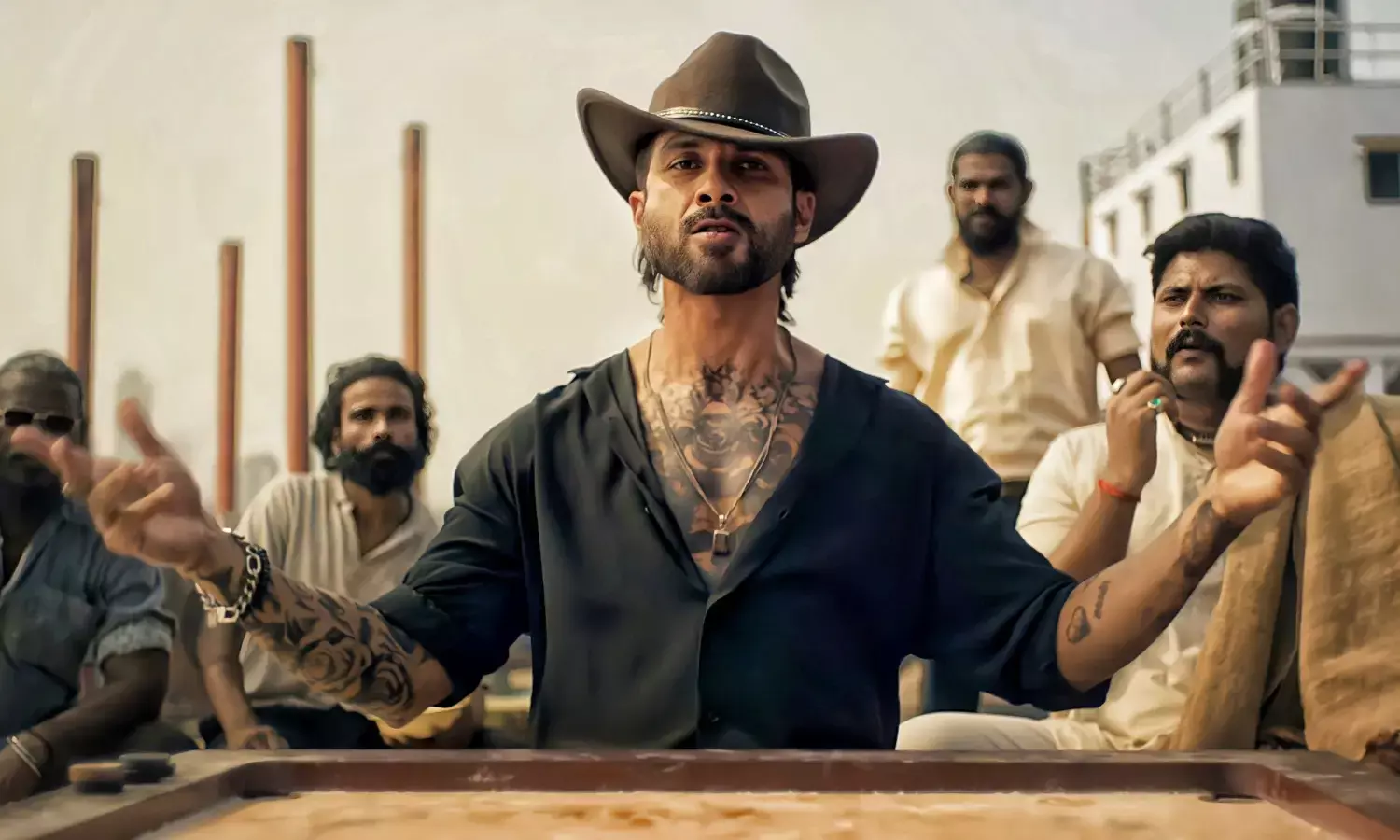
O’Romeo controversy has erupted just as the film began attracting attention, with Hussain Ustara’s daughter Sanober Shaikh issuing a Rs 2 crore legal notice to the makers along with a strict seven-day ultimatum.
O’Romeo Controversy: Why the Legal Notice Was Issued
The makers of the upcoming film ‘O’Romeo’ are facing serious trouble after Sanober Shaikh, daughter of the late and controversial figure Hussain Ustara, issued a Rs 2 crore legal notice against the production team. According to reports, the notice comes with a strict seven-day ultimatum, demanding immediate action over what she claims is an unauthorized and distorted portrayal of her father’s life.
The development has sent ripples through the film industry, reigniting debates around artistic freedom, consent, and the ethical responsibility of filmmakers when drawing inspiration from real-life figures.O’Romeo controversy
The Core of the Dispute
How the O’Romeo Controversy Could Impact the Film’s Release
Sanober Shaikh, through her legal representatives, has alleged that O’Romeo draws heavily from the life of Hussain Ustara without obtaining permission from his family. The notice reportedly accuses the makers of exploiting personal history for commercial gain while presenting events in a manner that could harm the family’s reputationO’Romeo controversy
Sources close to the matter claim that the legal notice demands either substantial compensation or immediate corrective measures, including possible changes to the film’s narrative. Failure to comply within seven days could reportedly lead to further legal action, including court proceedings and an injunction on the film’s release O’Romeo controversy
As of now, the filmmakers have not issued an official response.
Who Was Hussain Ustara?
Hussain Ustara remains a complex and controversial figure, remembered differently by different sections of society. His life, marked by notoriety and intrigue, has often been discussed in whispered conversations rather than documented history O’Romeo controversy
Legal disputes around films are not new, especially in cases involving Indian cinema legal controversies.
That very ambiguity appears to be what attracted filmmakers to his story — but it is also what makes such portrayals extremely sensitive. For families of such individuals, cinematic interpretations can feel less like storytelling and more like judgment passed on a public stage.
Sanober Shaikh’s objection, according to reports, stems not just from the film’s existence, but from how her father is allegedly depicted — a portrayal she claims lacks nuance and disregards the emotional impact on surviving family members.
A Familiar Battle in Indian Cinema
The O’Romeo controversy is far from an isolated incident. Indian cinema has repeatedly found itself at the crossroads of real-life inspiration and legal resistance O’Romeo controversy.
From biopics and crime dramas to fictionalized retellings of true events, filmmakers often walk a fine line between creative expression and personal intrusion. While cinema has the power to document history and provoke discussion, it also carries the responsibility of fairness, accuracy, and consent — especially when living relatives are involved O’Romeo controversy.
Legal experts note that while public figures have limited privacy rights, their families can still challenge portrayals they believe are defamatory or misleading. Such disputes frequently delay releases, inflate production costs, and sometimes force filmmakers into out-of-court settlements O’Romeo controversy
What the Legal Notice Means for ‘O’Romeo’
A Rs 2 crore legal notice is not merely symbolic — it sends a clear message.
Industry insiders suggest that even if the filmmakers are confident about their legal standing, the notice could complicate distribution deals, censor certification, and promotional plans. Investors and distributors typically grow cautious when legal clouds loom over a project, especially close to release O’Romeo controversy
If the matter escalates to court, the film could face:
Temporary or permanent release delays
Mandatory edits or disclaimers
Financial penalties or settlements
Reputational damage impacting box office performance
For a film already navigating competitive release windows, the timing of this controversy could not be worse.
Silence from the Makers — For Now O’Romeo controversy
Interestingly, the production team behind O’Romeo has chosen not to respond publicly so far. This silence could be strategic, allowing legal teams to assess the notice before making any statements. However, in the age of instant news cycles and social media outrage, silence often fuels speculation.
Film trade analysts believe the makers will soon have to clarify whether O’Romeo is officially based on real events or merely “inspired” by certain elements — a distinction that often becomes crucial in legal battles.
Art, Accountability, and the Price of Storytelling
At its heart, the O’Romeo controversy highlights a larger question facing modern cinema: O’Romeo controversy
Where does artistic freedom end, and accountability begin?
Audiences increasingly demand authenticity and realism, pushing filmmakers toward stories rooted in real lives. But authenticity without consent can come at a steep cost — legally, emotionally, and ethically.
For Sanober Shaikh, this is not a debate about cinema theory. It is personal. A father’s legacy, however complicated, remains deeply tied to family identity. Her legal action signals a refusal to let that legacy be reshaped without challenge.
What Happens Next?
The next seven days could determine the fate O’Romeo controversy
If the filmmakers respond with dialogue or compromise, the issue may quietly resolve behind closed doors. If not, the dispute could escalate into a prolonged legal battle, drawing even more attention to the film — though not in the way its creators may have hoped.
One thing is certain: O’Romeo is no longer just a movie. It has become a flashpoint in the ongoing struggle between storytelling ambition and personal truth.
As Indian cinema continues to mine real lives for powerful narratives, this controversy serves as a reminder that some stories demand not just creativity — but consent
According to legal experts quoted by Bar & Bench, unauthorised portrayals of real individuals can invite serious legal consequences.
For More News updates : https://asiapedia.in