
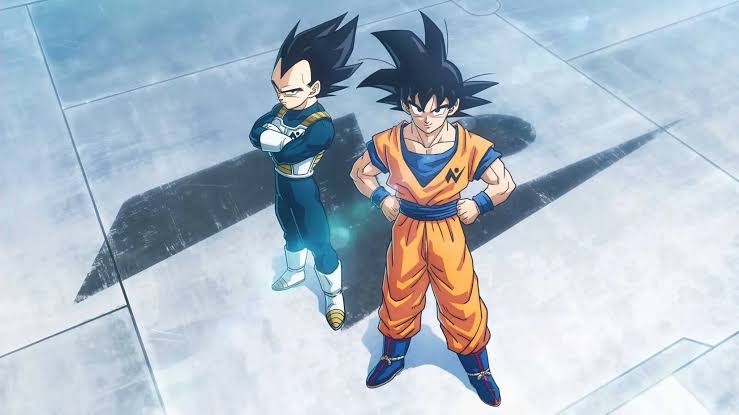
For years now, Dragon Ball Super Galactic Return has lived in a strange limbo. Not gone, not fully present — hovering somewhere between manga chapters, movie spectacles, and endless fan theories. Every few months, a rumor would surface. A voice actor would drop a hint. A leaked visual would circulate. And then, silence again.
Until now.
With Dragon Ball Super Galactic Return officially making its return, one thing is immediately clear: this isn’t just a continuation. It’s an expansion. Bigger in scale, broader in imagination, and unapologetically cosmic. If Dragon Ball Super Galactic Return was about pushing limits on Earth and Super began by shaking the gods themselves, what we’re seeing now feels like the franchise finally embracing the full weight of its universe.
Not just planets. Not just timelines. But galaxies.
Why This Comeback Feels Different
Dragon Ball Super Galactic Return has always been about escalation. From Raditz landing on Earth to Beerus casually threatening to erase universes, the series thrives on one question: How much bigger can this get?
But what makes this return exciting isn’t just power levels or new transformations. It’s intent.
Earlier arcs of Dragon Ball Super Galactic Return often felt reactive — retelling movie events, revisiting familiar faces, or revising old ideas with divine twists. This time, there’s a sense of forward motion. A feeling that the story isn’t looking back at what Dragon Ball was, but ahead at what it can still become.
The narrative focus has shifted outward. Away from Earth-centric conflicts and tournament-based structures. Toward interstellar politics, ancient civilizations, unexplored races, and threats that don’t simply want domination — but disruption.
That’s a big tonal shift.
From Martial Arts to Cosmic Mythology
At its core, Dragon Ball Super Galactic Return began as a martial arts fantasy. Fights were personal. Rivalries mattered. Training arcs weren’t filler — they were the story.
Over time, gods entered the picture. Angels, destroyers, omniversal laws. What the new galactic direction does is merge both identities of Dragon Ball Super Galactic Return — the grounded warrior spirit and the abstract cosmic mythos.
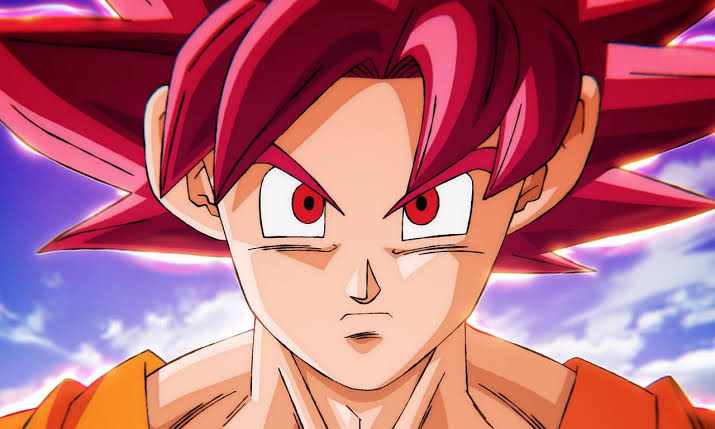
We’re no longer just asking who is stronger.
We’re asking:
- Who controls the balance of the universe?
- What happens when ancient galactic forces collide with Saiyan instinct?
- How small is Earth, really, in the grand design?
That philosophical expansion gives the series breathing room it hasn’t had in years.
Characters Finally Have Space to Grow Again
One of the quiet criticisms of Dragon Ball Super Galactic Return has been character stagnation. Goku remains Goku. Vegeta grows, but in measured steps. Side characters orbit the action without truly influencing it.
The galactic scope changes that dynamic.
When the story leaves Earth behind, it forces characters into unfamiliar moral and strategic territory. Goku’s simplicity becomes both a strength and a liability. Vegeta’s royal pride takes on new meaning when confronted with empires far older than Saiyan history. Even supporting characters gain relevance when Earth is no longer the narrative center.
Conflict stops being just physical.
It becomes ideological.
The Stakes Aren’t Louder — They’re Deeper
Dragon Ball Super Galactic Return has never struggled with stakes. The universe is destroyed every other arc. Death is reversible. Gods press reset buttons.
So how do you make danger feel real again?
By changing what’s at risk.
Instead of annihilation, the new direction leans toward consequence. Power imbalances between galaxies. Civilizations erased not by explosions, but by systems. Enemies who don’t scream or transform — they calculate.
That kind of threat doesn’t require constant yelling or flashing auras. It lingers. It reshapes the world even after the fight ends.
And that’s a smarter evolution for a franchise this old.
A Visual Identity That Matches the Scale
There’s also a noticeable aesthetic shift. Cosmic landscapes, alien architecture, unfamiliar star systems — all of it reinforces the idea that Dragon Ball Super Galactic Return has outgrown Earth’s skies.
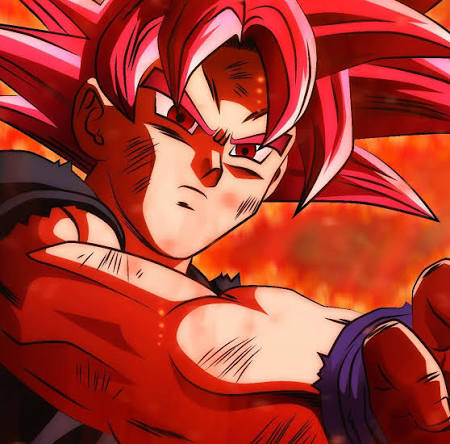
The universe finally looks as big as the lore always claimed it was.
This matters more than it seems. Visual storytelling has always been Dragon Ball’s silent strength. When the environments evolve, the fights feel different. Movement changes. Strategy adapts. The series stops recycling visual memory and starts building new ones.
Why This Moment Matters for Dragon Ball’s Legacy
Dragon Ball doesn’t need to prove anything. Its influence is unquestionable. Generations grew up screaming Kamehameha in playgrounds. Anime itself looks different because Akira Toriyama existed.
But longevity demands reinvention.
This galactic turn feels like Dragon Ball Super Galactic Return acknowledging its age — not by slowing down, but by broadening its horizons. It’s a refusal to become a nostalgia machine. A decision to keep exploring instead of repeating.
That’s rare for a franchise this massive.
Not Just a Return — A Statement
Dragon Ball Super Galactic Return isn’t just news. It’s a statement of confidence.
A message that says:
“We still have stories worth telling. Worlds worth discovering. Conflicts that can’t be solved by punching harder.”
Whether this galactic direction fully delivers remains to be seen. Dragon Ball Super Galactic Return has stumbled before. But for the first time in a while, the dragonballs up excitement doesn’t feel forced. It feels earned.
And as the universe opens up once more, one thing is certain —Crunchyroll
Dragon Ball isn’t done growing.
It’s just finally looking up at the stars.
For More News updates : https://asiapedia.in