
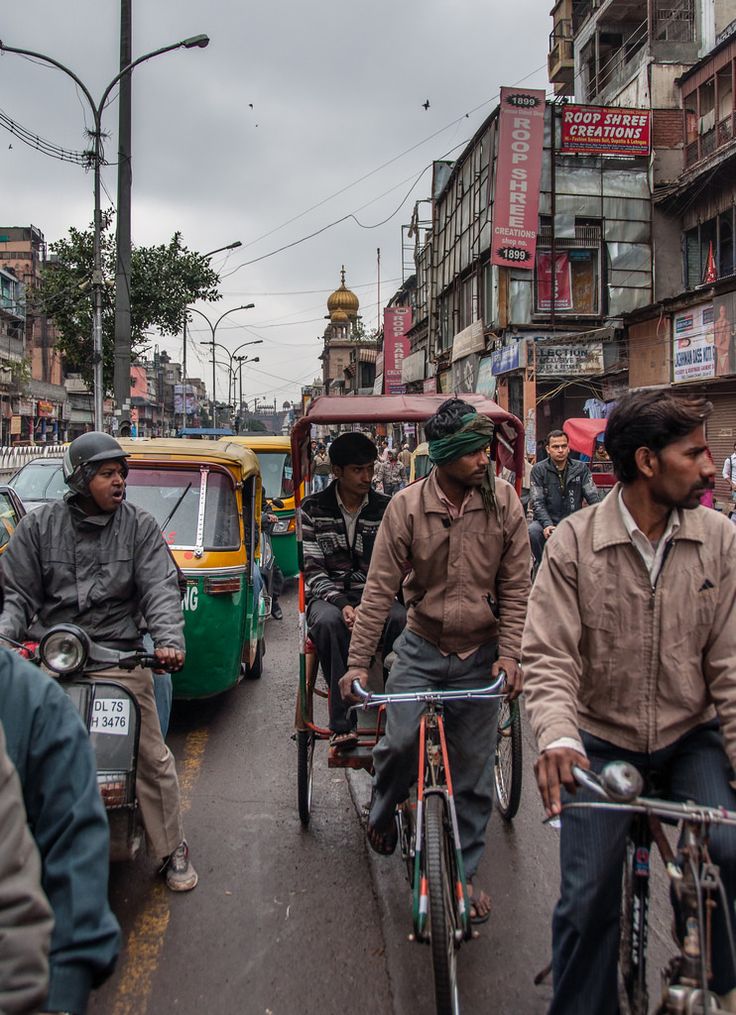
Walking in an Indian city is rarely a straightforward act. It is a negotiation. With traffic, with vendors, with broken pavements, with people moving in every possible direction at once. And yet, walking remains one of the most common ways Indians navigate their cities.
Footpaths are rarely empty. They are extensions of the street, carrying tea stalls, parked scooters, flower sellers, and conversations. Pedestrians learn to weave instinctively, stepping on and off the pavement without breaking rhythm. Walking becomes less about distance and more about alertness.
Flyovers were meant to simplify movement, but they have only added layers. Below them, auto rickshaws pause mid-road, buses stop wherever space appears, and people cross when the traffic allows rather than when the signal changes. Above, cars flow faster, disconnected from the street life unfolding beneath.
Daily mobility in Indian cities is shaped by adaptation. People leave earlier than necessary, anticipating delays. Routes are memorized not by maps but by mood. A road is avoided because it floods. Another because it “gets stuck after seven.” These choices are shared knowledge, passed through conversation rather than navigation apps.
December mornings bring a softer pace. Fog slows traffic. Pedestrians wrap shawls tighter and walk faster. Evening walks become longer, especially in markets glowing with seasonal lights. The city feels less rushed, even if it moves no slower.
What stands out is resilience. Despite congestion, despite infrastructure that often forgets the pedestrian, cities function because people adjust continuously. Walking, waiting, and rerouting become everyday skills, practiced without complaint.
Urban mobility in India is not about perfect systems. It is about movement as habit. About learning to coexist with chaos. And about understanding that getting from one place to another is rarely just physical. It is social, sensory, and deeply human.
For More News updates : https://asiapedia.in