
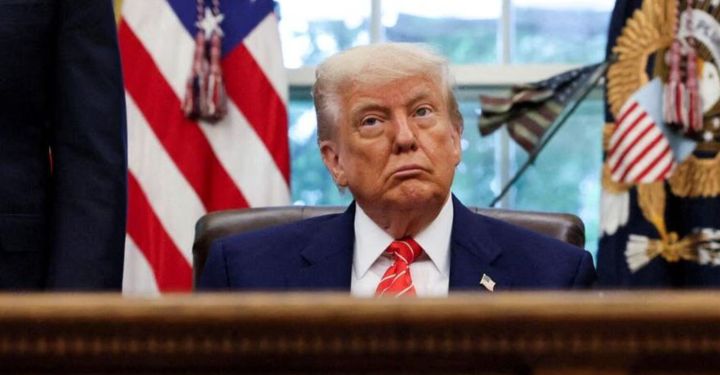
In July 2019, an offhand comment by former U.S. President Donald Trump altered the diplomatic tone in South Asia and exposed the critical importance of narrative control in international relations. Standing beside Pakistani Prime Minister Imran Khan at the White House, Trump offered to mediate the Kashmir dispute—a gesture that might have seemed conciliatory but was diplomatically explosive.
Trump claimed that Indian Prime Minister Narendra Modi had asked him to mediate on Kashmir. The assertion was both unexpected and contentious. India, caught off guard, moved swiftly to reject the statement. “No such request has been made,” said India’s Ministry of External Affairs. “All issues with Pakistan are to be discussed bilaterally.”
This wasn’t just about fact-checking Trump—it was about safeguarding a long-standing foreign policy position. For decades, India has resisted any attempt to internationalize the Kashmir issue. Mediation by a third party, even a trusted ally like the United States, is seen as undermining India’s sovereignty and contradicting the Simla Agreement of 1972.
The fallout was immediate and intense. Indian Parliament witnessed rare unanimity as all parties demanded a clear denial from the U.S. State Department, which eventually arrived. The U.S. clarified that it supports a bilateral resolution and respects India’s stance.
The episode also brought into focus the nature of diplomacy in the era of personality politics. Trump’s brand of off-the-cuff, improvisational communication clashed with the delicate and calculated tone that diplomacy usually requires. In regions as sensitive as South Asia, such deviations can have real consequences.
Pakistan, for its part, capitalized on the moment. Prime Minister Imran Khan described Trump’s offer as “historic” and “the way forward.” Pakistan has long advocated for international mediation in Kashmir, viewing it as a way to pressure India and amplify global attention to the dispute.
However, the U.S. clarification dampened Islamabad’s enthusiasm. Analysts noted that while Trump may have spoken without a script, the official American position hadn’t changed—and neither had the geopolitical reality.
Indian foreign policy experts took the opportunity to reflect on the strength of India’s global narrative. “India’s response was quick, consistent, and across-the-board,” said Ambassador Nirupama Rao, former Indian Foreign Secretary. “That level of unity is essential in managing such diplomatic turbulence.”
The incident also sparked a broader conversation about the tools of modern diplomacy. In an age dominated by media cycles, social platforms, and 24/7 news, controlling the message is as important as conducting policy. India’s ability to push back swiftly and shape the narrative helped prevent the controversy from snowballing into something more damaging.
Still, the event served as a reminder of how perception shapes foreign policy. Had India not responded quickly, Trump’s comment could have been interpreted as a shift in U.S. policy—intentionally or not. The backlash showed that global audiences take statements from world leaders seriously, even when they contradict the facts.
The lesson for India was clear: even allies need reminders of red lines. In this case, India reasserted that while it welcomes friendship and support, its internal matters—especially Kashmir—are off-limits for third-party negotiation.
Going forward, India may focus more on diplomatic preparedness. Increased engagement with global leaders, preemptive briefings, and rapid-response teams to address misinformation could become essential tools in safeguarding its foreign policy framework.
The incident also reinforced the importance of cultivating bipartisan support for foreign policy. The swift unity in Parliament strengthened India’s global message and demonstrated political maturity on a matter of national interest.
As the global balance of power shifts, and as India’s role on the world stage grows, the country will encounter more such diplomatic tests. The Trump-Kashmir episode, while brief, was a revealing one. It reminded the world that words matter—especially when they concern peace, conflict, and sovereignty.
For More News updates : https://asiapedia.in