

In the hyper-competitive landscape of Indian cinema, the term “Blockbuster” has almost become synonymous with gravity-defying stunts, explosive CGI, and loud background scores. From the sand dunes of Baahubali to the blood-soaked mines of KGF, action has been the primary engine for the ₹1,000 crore club. However, if we look back exactly nine years, we find a phenomenon that defies every modern rule of commercial success. India’s biggest non-action blockbuster, a grounded sports drama, managed to conquer the global box office, earning over ₹2,000 crore without firing a single bullet.
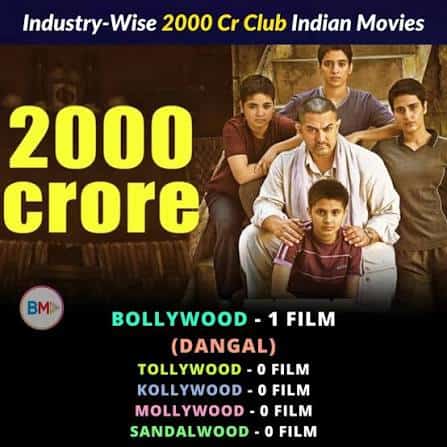
That film is, of course, Dangal. But why does its record remain untouched even in 2025?
The Anatomy of a Masterpiece
When Nitesh Tiwari set out to tell the story of Mahavir Singh Phogat and his daughters, he wasn’t just making a sports movie; he was crafting a masterpiece of human psychology. Unlike the “masala” entertainers of its time, this India’s biggest non-action blockbuster focused on the sweat of the wrestling pit rather than the glamour of the screen.
The brilliance of the film lies in its pacing and emotional payoff. In a world obsessed with “elevation scenes,” Dangal gave us elevation through character growth. When Geeta Phogat wins her first international match, the audience doesn’t cheer for the actress; they cheer for the years of struggle, the early morning runs, and the father’s relentless discipline that they witnessed on screen.
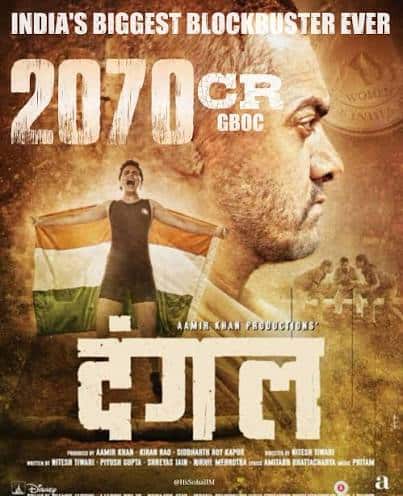
Breaking the Global Barrier: The China Factor
One cannot discuss India’s biggest non-action blockbuster without mentioning its unprecedented success in China. While action films often struggle with cultural nuances, Dangal’s themes of parental sacrifice and the struggle against societal norms resonated deeply with the Chinese audience.
It proved a vital point in film commerce: Emotion is the only universal language. While we often discuss [internal link: The Rise of Pan-Indian Cinema], Dangal was perhaps the first true “Pan-Global” Indian film. It didn’t just play in theaters; it started conversations about gender equality and sports infrastructure across two of the world’s most populous nations.
The Disappearance of the Mid-Budget Epic
Today, the industry is witnessing a “Death of the Middle.” Filmmakers are either making small-scale indie films or massive action spectacles. The “mid-budget epic”—a film that relies on a strong script and high performance—is becoming a rarity. This is why India’s biggest non-action blockbuster feels like a relic from a golden era of storytelling.
To understand how cinema has evolved since then, you can read our analysis on [internal link: Why Indian Audiences are Craving Better Scripts]. The success of Dangal was not a fluke; it was the result of a “perfectionist” approach where every detail, from the Haryanvi dialect to the technicalities of a wrestling “pin,” was handled with surgical precision.
Why This Record is Hard to Break
You might ask, “Why hasn’t another drama reached these heights?” The answer lies in the Theatrical Spectacle Tax. Post-pandemic, audiences are often hesitant to visit theaters for anything that isn’t a “visual event.” However, Dangal created a “theatrical event” out of raw emotion. It made the sound of a whistle in a wrestling arena feel as loud as a bomb blast in an action movie.

According to global box office trackers like [outbound link: Variety Entertainment News], very few non-English films have managed to sustain such a long-term interest in international markets. This puts India’s biggest non-action blockbuster in a league of its own, alongside legendary global hits.
Conclusion: The Soul Over the Sword
As we mark nine years since its release, the legacy of Dangal serves as a North Star for future storytellers. It reminds us that while action can capture the eyes, only a soul-stirring story can capture the heart—and the wallet—of the entire world. India’s biggest non-action blockbuster didn’t just earn ₹2,000 crore; it earned a permanent place in the history of global cinema.
The wrestling pit may be dusty, and the record may be old, but the lessons of Dangal are more relevant than ever. In a world of noise, sometimes the most powerful thing you can do is tell a simple story, truthfully.
For More News updates : https://asiapedia.in