
India is often described through its permanent landmarks, ancient cities, historic towns, and expanding metros. Yet parallel to this mapped India exists another country altogether, one that is constantly being built, inhabited, and dismantled. These are India’s temporary cities: settlements designed not to last, yet essential to how the nation functions.
These cities rarely appear on tourist itineraries or urban plans, but millions of people live within them every year. They emerge near pilgrimage sites, along highways, beside construction zones, on riverbanks, and at the edges of industrial growth. Their existence is practical, efficient, and transient, shaped entirely by purpose rather than permanence.
One of the most visible forms of temporary cities appears during large religious gatherings. Pilgrimage towns expand overnight into vast grids of tents, water pipelines, mobile hospitals, kitchens, and sanitation systems. These spaces function like fully operational cities, complete with security, healthcare, food distribution, and transportation, yet they are designed to vanish without leaving any architectural scars. What remains afterward is open land, as if nothing ever existed there.
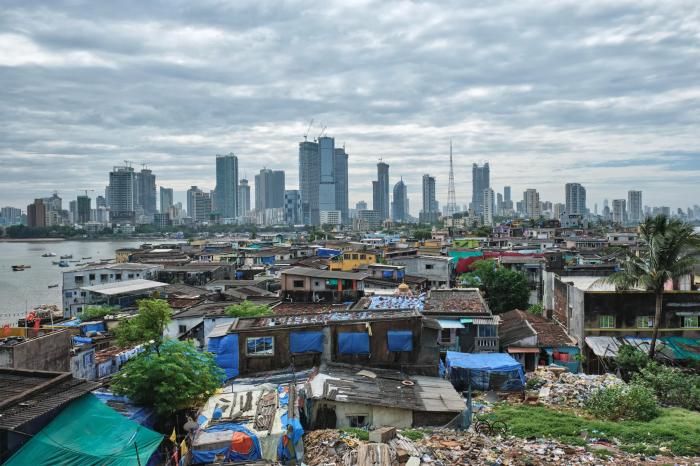
Construction worker settlements form another kind of temporary urbanism. Across Indian cities, labour colonies grow alongside high-rise projects and infrastructure developments. Tin-roofed rooms, shared water points, improvised schools, and local markets appear wherever long-term construction is underway. These settlements may exist for years, housing entire families, yet they are removed once the project concludes. The city absorbs the building, but erases the lives that helped raise it.
Highways, too, generate temporary worlds. Road expansion projects give rise to roadside camps where workers live close to worksites. These camps operate on shifting schedules, moving as roads stretch forward. Small eateries, repair stalls, and informal shops attach themselves to these zones, serving a population always on the verge of relocation. Travel through these regions reveals communities that exist only in motion.
Seasonal livelihoods create temporary cities along India’s coasts and rivers. Fishing communities establish short-term settlements during specific harvest cycles, complete with storage spaces, drying yards, and local trade networks. Riverbank camps emerge during dry months and disappear before monsoon floods reclaim the land. These settlements reflect deep environmental knowledge and adaptive living rather than instability.
What defines these temporary cities is not chaos, but organization. They follow internal systems, rules of space, social hierarchies, and daily rhythms that allow them to function smoothly despite limited resources. Water is rationed, waste is managed creatively, and community roles are clearly defined. The absence of permanence often leads to stronger cooperation, because survival depends on collective effort.
From a lifestyle perspective, these cities challenge modern assumptions about home and belonging. They reveal that stability does not always require permanent structures. For many residents, these settlements are neither temporary nor marginal; they are where life happens. Children grow up here, routines form, festivals are celebrated, and memories accumulate even in spaces destined to disappear.
Travel writing rarely acknowledges these places because they resist being put on display. There are no monuments to photograph, no curated experiences to consume. Yet observing these cities offers a deeper understanding of how India works, how labour, faith, economy, and environment intersect in practical ways.
India’s temporary cities remind us that mobility is not always a choice, and impermanence is often a design feature rather than a flaw. They exist quietly, efficiently, and briefly, supporting the visible nation while remaining largely unseen. When they disappear, the country moves on, carrying forward the labour and lives that once occupied those erased spaces.
For More News updates : https://asiapedia.in