
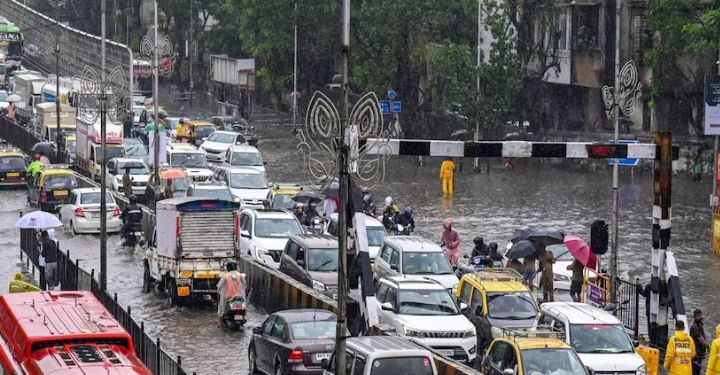
Mumbai, India’s economic powerhouse, is reeling under the impact of torrential rains that marked the arrival of the monsoon season in the most dramatic fashion. On May 26, the India Meteorological Department (IMD) issued a Red Alert as several parts of the city recorded one of the heaviest May rainfalls in over 100 years. The rain brought life to a near standstill, exposing the vulnerabilities of a city frequently tested by extreme weather.
Rainfall Records Smashed
Rain poured relentlessly across Mumbai’s southern and suburban zones. Colaba station recorded an astounding 439 mm, while areas like Dadar, Mahim, and Chembur received upward of 150 mm within hours. Roads turned into rivers, drains overflowed, and residents scrambled to protect homes and belongings.
Several parts of Mumbai, including areas that had recently undergone infrastructure upgrades, found themselves submerged. The stormwater systems, already aging and inefficient, buckled under the pressure.
Transport Disruptions: The City Comes to a Halt
Train services were among the first casualties. With tracks flooded and signals malfunctioning due to water ingress, more than 60 train services were suspended or delayed across Central, Harbour, and Western lines. Thousands of daily commuters had no choice but to return home or take alternative, unreliable transport.
Bus services faced widespread disruptions, with more than 100 BEST routes diverted or cancelled. In areas like Andheri and Sion, people had to wade through waist-deep water to reach bus stops, only to find services halted.
The city’s airport, which handles over 900 flights a day, saw more than 80 delays. Airlines issued advisories to passengers, and some diverted aircraft to Pune and Ahmedabad.
Power Outages and Communication Gaps
The deluge knocked out power in several suburbs. From Mulund to Malvani, residents reported outages that lasted over 10 hours. In areas like Dharavi and Govandi, power cuts were enforced as a precaution to prevent electrocution incidents.
Cell towers also went offline, particularly in flood-hit pockets. Residents found themselves cut off from emergency helplines, relying on social media updates for real-time information.
Flood Management System Under Scrutiny
This monsoon’s early and intense onset laid bare the flaws in Mumbai’s flood management strategy. BMC’s flood control room received over 1,500 distress calls in 24 hours, most concerning waterlogging, tree falls, and short-circuits. While dewatering pumps were deployed across 200 locations, in many areas they failed to operate efficiently due to debris or power failure.
The much-touted underground water storage tanks in low-lying Hindmata and Milan Subway areas were either overwhelmed or remained unused due to coordination lapses. Experts pointed out that real-time telemetry data — essential for flood forecasting — was not fully operational.
Relief Efforts and Citizen Support
Despite institutional setbacks, relief operations by civic volunteers, NGOs, and emergency services were swift. Firefighters responded to more than 100 calls, assisting in home evacuations, short-circuit prevention, and even rescuing stranded motorists.
The BMC opened over 30 temporary shelters across the city, providing drinking water, basic meals, and dry clothing. Private hospitals extended their hours and accepted patients from flood-hit clinics.
Citizen-led groups played a significant role by coordinating food distribution, updating community WhatsApp groups with real-time alerts, and helping those stranded contact family members.
The Road Ahead: More Rains Expected
The IMD has forecast continuing rain for the next three days, with isolated areas potentially experiencing over 150 mm in 24 hours. High tides and strong winds are expected to accompany further downpours.
Authorities have urged residents to avoid travel, keep essential items ready, and cooperate with local relief efforts. Schools will remain closed, and construction activities have been suspended until weather conditions improve.
Mumbai’s latest brush with extreme weather serves as a reminder: climate resilience must become a top urban planning priority. Without long-term vision and accountable execution, the city will remain vulnerable to annual flooding catastrophes.
For More News updates : https://asiapedia.in