
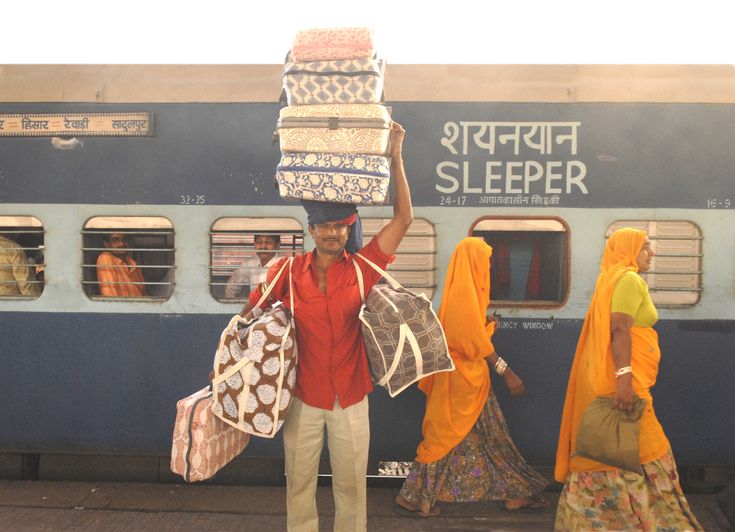
Travel guides love certainty: highlighted routes, starred attractions, neat timelines. But India has always moved differently. Its most meaningful journeys rarely happen on the routes marked in bold. They happen on the roads locals take without naming them as journeys at all.
In every Indian city, there exists an alternate map, one drawn from habit, memory, and necessity. These are the lanes that do not promise beauty yet to deliver a sense of belonging. A narrow road behind a bus stand in Madurai, where flower vendors cycle home at dusk. A footbridge in Howrah that thousands cross daily, not to see the river but to reach life on the other side. These routes are not scenic in the Instagram sense, yet they carry the pulse of everyday India.
Tourists often travel vertically, monument to monument, experience to experience. Locals travel horizontally. They move through tea stalls, temple shortcuts, old market lanes, and half-forgotten crossings. A woman in Varanasi knows exactly which alley will spare her the crowd near the ghats at sunrise. A student in Pune chooses a longer bus route because it passes a familiar chai tapri. These choices are not about efficiency alone; they are emotional.
What makes these routes invisible is that they are not designed to impress. They exist to function. Yet, function in India is layered. A street can be a workplace in the morning, a resting place in the afternoon, and a social space by evening. A road in Kerala might smell of rain-soaked earth, frying banana chips, and diesel, all at once. The route itself becomes an archive of sensory memory.
Traveling on these paths requires a different posture. One must slow down, ask fewer questions, observe more. It means sitting in shared autos without knowing the destination names, trusting conductors who call out stops in half-sentences, and following crowds without asking where they are going. These routes reward patience rather than planning.
There is also a quiet democracy to these journeys. On a local route, hierarchies blur. Office workers, vendors, students, and pilgrims all occupy the same physical space. A bus bench becomes a brief social contract. Conversations spark and disappear. Advice is offered freely. Silence is shared without awkwardness. For a moment, everyone belongs to the same movement.
These routes remind us that India is not best understood from viewpoints but from passageways. The country reveals itself not when it pauses for photographs, but when it continues moving despite chaos, delays, and detours. To travel like a local is not to mimic habits but to surrender control, to accept that the road knows more than the map.
In choosing these overlooked routes, travel becomes less about seeing India and more about being carried by it. And often, that is where the real country quietly waits.
For More News updates : https://asiapedia.in