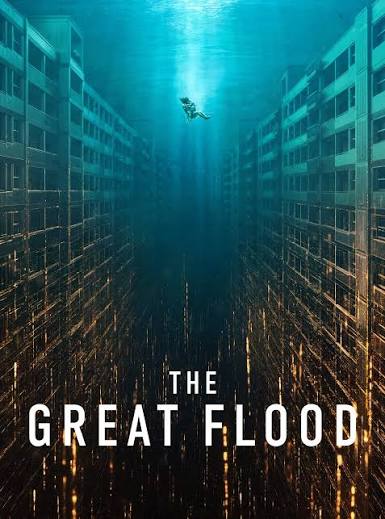
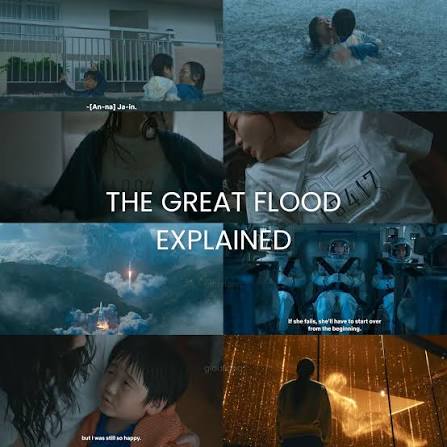
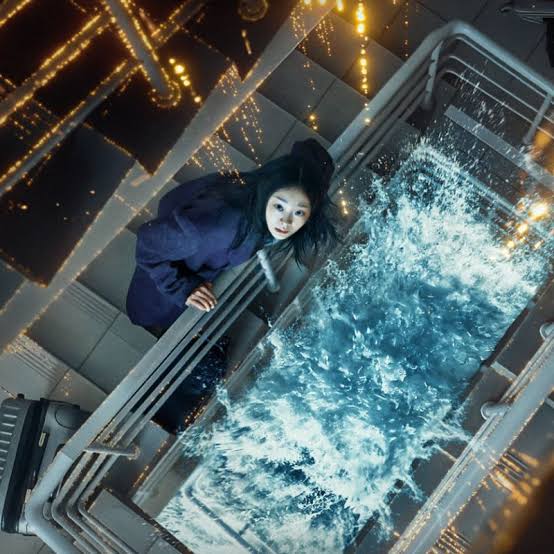
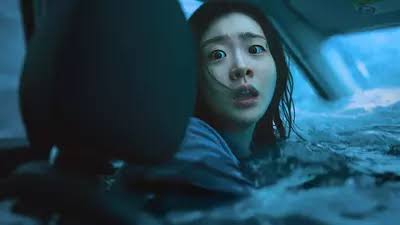
The Great Flood ending explained is what every sci-fi fan is searching for after watching the mind-bending South Korean masterpiece. The film starts as a simple survival story but quickly evolves into a complex narrative about quantum physics and the human spirit. If you found yourself lost in the rising tides and the repetitive hours, you aren’t alone.
What is the Truth Behind the Flood?
While the visuals suggest a natural disaster, the truth is far more clinical. The “flood” isn’t just rain or rising oceans; it is the physical collapse of reality caused by FTL (Faster Than Light) research. In the film’s universe, scientists tried to bridge the gap between time and space, but instead, they fractured the timeline.
The water represents the “weight” of these collapsing dimensions. As the lab sinks, the characters aren’t just fighting drowning; they are fighting the erasure of their very existence. For more on how South Korean cinema handles such high-concept sci-fi, check out our previous analysis on K-Sci-Fi trends (Internal Link).
The Great Flood Ending Explained: Breaking the Loop
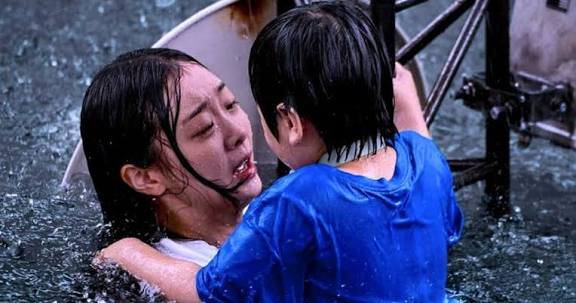
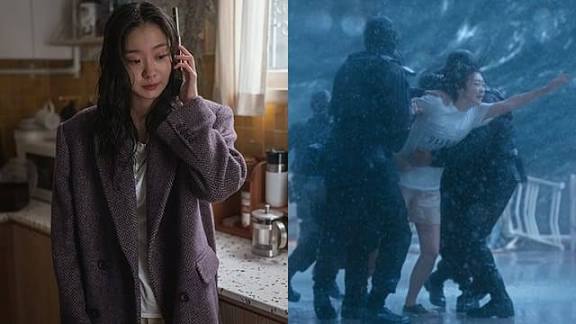
The most haunting aspect of the movie is the time loop. Anna and the child are trapped in a recursive cycle, but why? The truth is that the loop is a digital fail-safe. To save her daughter, Anna’s consciousness was uploaded into a simulation where she could try different variables to ensure survival.
Every time the child dies, the “system” resets. This explains the “ghosts” or echoes Anna sees—they are memories of her own failures from previous cycles.
Pro Tip: Look closely at the background details in the lab; the slight changes in equipment positions indicate which “version” of the loop we are currently watching.
The Ethical Dilemma: A Mother’s Choice
In the final act, The Great Flood ending explained its true heart: it’s not about physics, but about a mother’s refusal to let go. Anna realizes that the only way to “save” her daughter isn’t to stop the water, but to complete the upload.
By the end, the line between reality and the digital world blurs. They don’t necessarily walk out onto dry land; instead, they achieve a form of “data immortality.” They escaped the physical flood by transcending into a space where the water can no longer reach them.
Why This Movie Matters Today
The film uses “The Great Flood” as a powerful metaphor for climate anxiety and the ethical boundaries of AI. Just as we see in other global hits like Interstellar or Inception, the human element remains the anchor. According to Scientific American’s theory on time dilation (Outbound Link), the concept of time slowing down during a crisis is a real psychological phenomenon, which the movie captures perfectly.
Final Thoughts
The Great Flood ending explained the fact that hope is the only thing that doesn’t drown. Whether they are in a simulation or a new reality, Anna and her daughter found a way to stay together. It is a haunting, beautiful ending to a relentless thriller.