
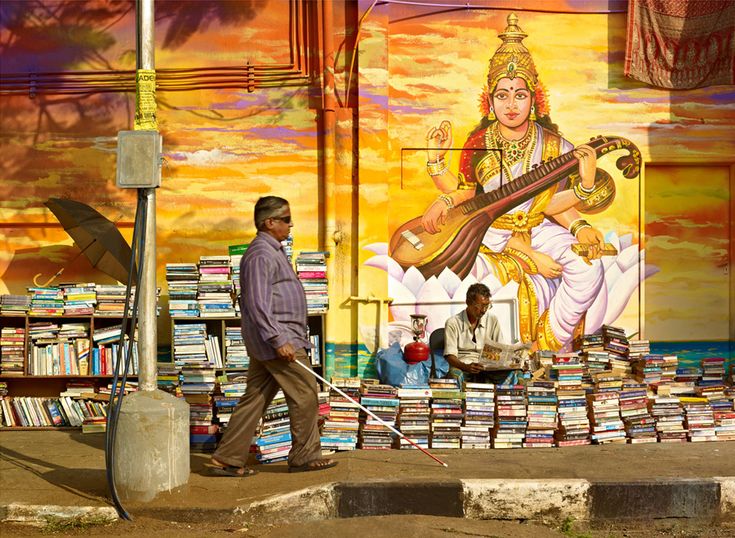
In many parts of India, art does not wait to be noticed. It wakes up early, sits cross-legged on floors, stains fingers, strains eyes, and ends the day tired. These are places where art is not framed, spotlighted, or labelled, it is simply work.
Travelling through such regions feels fundamentally different from visiting cultural centers or museums. There is no clear moment where art begins. You notice it slowly, in the repetition of movement, in materials drying under the sun, in tools passed down rather than replaced. Art here does not announce itself; it reveals itself only if you stay long enough.
In these towns and villages, creativity exists inside routine. Painters repaint the same motifs daily, not for variation but for continuity. Weavers work within inherited patterns, not because of restriction, but because identity lives there. Sculptors and craftspeople do not experiment constantly; they refine.
For travellers, this demands a shift in perspective. You are not there to “see” art, you are there to witness process. The most meaningful moments are often unplanned: watching someone prepare materials, repair a tool, or correct a small error with care that speaks of decades, not minutes.
What stands out is how unromantic this work is for those who do it. There is pride, but little spectacle. Deadlines matter more than inspiration. Weather, health, and demand shape output. Creativity exists within economic reality, not outside it. This honesty is what makes such travel powerful. It removes the illusion that art is separate from survival. In these places, art feeds families, educates children, and sustains communities. It is not preserved, it is practiced.
Another striking feature is how knowledge moves. There are no instruction manuals. Skills pass through observation, correction, and repetition. Children learn by watching. Mistakes are allowed, but standards are firm. This creates continuity without formal documentation.
For travellers, this becomes a lesson in patience and humility. You learn that appreciation does not require explanation. That some processes are not meant to be rushed or photographed. Presence becomes more valuable than documentation. These regions also reshape tourism itself. Visitors tend to stay longer, move slower, and leave quieter. There are less consumption and more absorption. The experience lingers not because of novelty, but because of respect.
In a world where art is increasingly packaged and exported, these places remind us that creativity does not need translation. It only needs space to continue.
For More News updates : https://asiapedia.in