
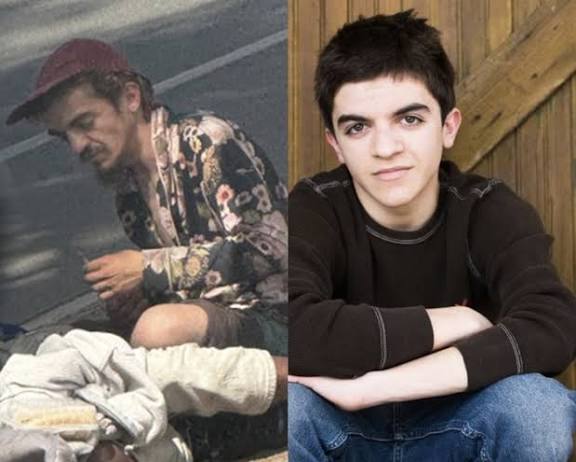
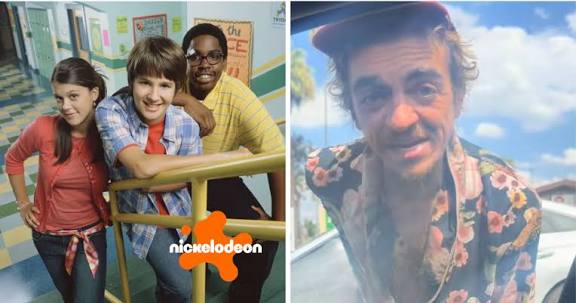
For a generation that grew up on the tactical wisdom of Ned’s Declassified School Survival Guide, the name Martin Qwerly brings back memories of rapid-fire dialogue and a quirky, high-energy presence. He was the kid who seemed to have an answer for everything. But today, the man behind the character, Tylor Chase, is wandering the streets of Riverside, California, caught in a survival guide for which no one wrote the rules.
The transition from a beloved child star to the reality of Tylor Chase being homeless isn’t just a “downward spiral” headline—it is a visceral, haunting look at how easily the light of early fame can burn out into total darkness.
A Viral Encounter: Why is Tylor Chase Homeless?
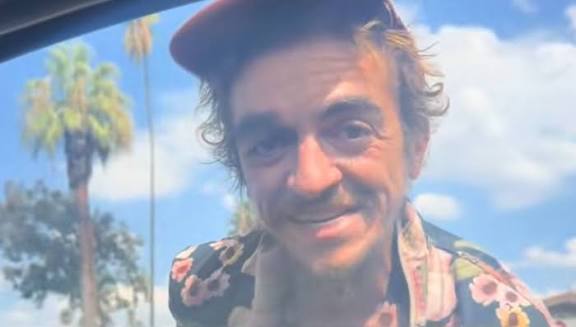
The world was jolted awake to Tylor’s reality through a series of viral TikTok videos. In these clips, we don’t see the polished actor from our television screens. Instead, we see a 36-year-old man who looks decades older, his face etched with the wear and tear of life on the pavement.
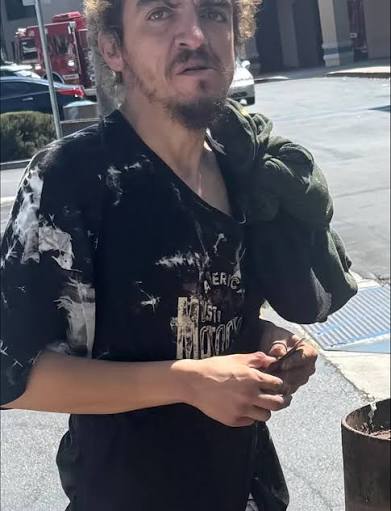
In one particularly gut-wrenching video, an influencer encounters him near a 7-Eleven. Dressed in tattered jeans and a worn grey T-shirt, Tylor is seen holding up his pants, his belongings likely scattered or lost. Even in this state, the “actor” in him remains. When asked about his past, he smiled—a flash of that old Martin Qwerly charm—and gently corrected them: “I was on Ned’s Declassified.” He even mentioned he was “auditioning for a movie,” a heartbreaking glimpse into a mind still anchored to a past that the world has long since moved on from.
The Silent Battle: Mental Health and the Industry Gap
While it is easy to blame “the industry” or “bad choices,” the truth behind Tylor Chase being homeless is far more complex and human. Years ago, in 2015, Tylor spoke openly about his struggle with Bipolar Disorder.
His mother, Paula, has since stepped in to clarify the situation, emphasizing that Tylor’s plight isn’t just about a lack of money—it’s about a lack of mental health stability. When fans launched a GoFundMe that raised over $1,200, his mother requested it be shut down. Her reasoning was sobering:
“He can’t manage money or his meds by himself. It could possibly hurt him. What he needs is medical help, not cash.”
This highlights a terrifying gap in the American social safety net. For someone with severe mental health issues, a viral “makeover” or a few thousand dollars is a band-aid on a bullet wound. You can read more about the challenges of mental health in Hollywood to understand the broader context.
The Brotherhood of “Ned’s Declassified”
In an era where many child stars drift apart, Tylor’s former co-stars—Devon Werkheiser (Ned), Daniel Curtis Lee (Cookie), and Lindsey Shaw (Moze)—didn’t look away. On their recent podcast, they addressed the situation with raw emotion. Daniel Curtis Lee eventually tracked Tylor down in person, describing the meeting as “crushing.”
The cast has pledged to use their platform to get him professional help, but they’ve also been honest about the difficulty of helping someone who is “in and out of coherence.”
Who is Tylor Chase? (Biography)
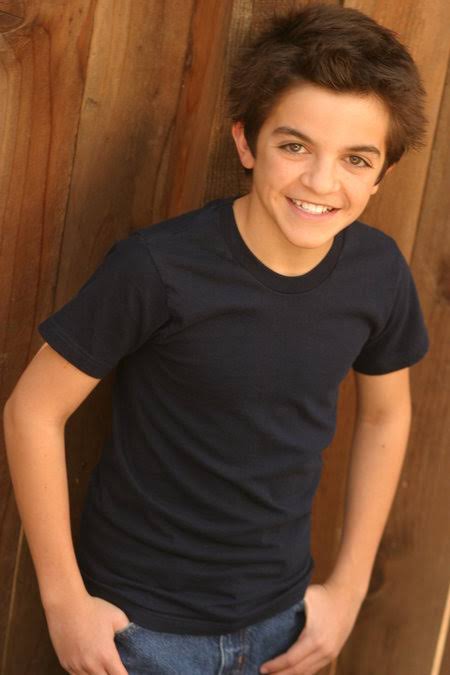
Tylor Chase (born June 16, 1989) is an American actor best known for his recurring role as Martin Qwerly in the Nickelodeon hit series Ned’s Declassified School Survival Guide (2004–2007). Known for his fast-talking and eccentric character, Chase was a fan favorite. Beyond Nickelodeon, he appeared in various commercials and minor roles in the mid-2000s. Despite his early success, the transition to adult acting was met with personal hurdles and mental health challenges, leading to his current displacement in Southern California.
Why This Hits Different
Tylor Chase’s story isn’t just about one actor; it’s a mirror held up to our own nostalgia. We watch these shows to feel safe, to remember a time when the biggest problem was a locker combination. Seeing “Martin” unhoused and unrecognizable breaks that illusion. It reminds us that behind every “quirky sidekick” is a human being who might be fighting a war we can’t see.
As of late 2025, Tylor remains on the streets of Riverside. His story is a loud, painful reminder that fame provides no immunity against the fragility of the human mind. He doesn’t need our “likes” or our “shares”; he needs a system that prioritizes mental healthcare over viral content.
For More News updates : https://asiapedia.in