

Marvel finales usually arrive with noise — sky beams, collapsing cities, portals tearing open reality. Wonder Man chose a different route. Its finale didn’t try to be the loudest chapter in the Marvel catalogue. Instead, it slowed down, looked inward, and trusted emotion over spectacle. And that choice is exactly why the ending feels so cathartic.
More About Self-Discovery Than Superpowers
From the very beginning, Wonder Man Finale Explained positioned itself as a story about identity rather than heroism. Simon Williams was never portrayed as someone desperate to save the world. He was a man trying to understand his place in it — as an actor, as a manufactured hero, and as someone constantly told what he is supposed to be. The finale brings all of those conflicts together in a way that feels earned, not forced.
What makes the final episode work is its refusal to rush resolution. The opening stretch is quiet, almost uncomfortable in how restrained it is. Wonder Man Finale Explained immediate action beat to grab attention. Instead, we’re placed inside Simon’s headspace. His doubts, his exhaustion, Wonder Man Finale Explained realization that power alone hasn’t given him peace. Marvel rarely allows its characters this much silence, and the show benefits immensely from it.
Letting Quiet Moments Do the Heavy Lifting
The emotional core of the finale revolves around choice. Wonder Man Finale Explained “save the city or let it burn” choice, but a far more personal one: does Simon continue playing versions of himself written by others, or does he finally define himself on his own terms? Throughout the series, Simon has been performing — on screen, in public, even in private conversations. The finale strips all that away. When he finally stops performing, the character feels startlingly real.
The antagonist’s role in the finale is particularly effective because they are not framed as purely evil. Instead, they function as a distorted mirror of Simon. Where Simon hesitates, they embrace control. Wonder Man Finale Explained Simon questions the system, they exploit it. Their final confrontation isn’t about who hits harder; it’s about whose worldview survives. The dialogue during these scenes carries more weight than any punch could. It’s ideological, personal, and deeply uncomfortable — in the best way.
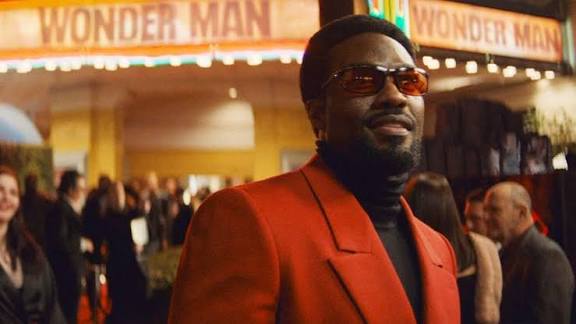
One of the standout aspects of the finale is how it treats violence. When action does erupt, it’s brief and purposeful. There’s no indulgence in destruction. Every blow feels like punctuation rather than a paragraph. This restraint reinforces the idea that the real climax isn’t physical victory, but emotional clarity. Wonder Man Finale Explained time the final conflict resolves, it feels less like a triumph and more like a release.
A Conflict Built on Ideology, Not Just Villainy
The supporting characters are also given satisfying, understated conclusions. Rather than wrapping everyone’s arc with neat bows, the finale allows ambiguity. Relationships don’t magically heal, and trust isn’t instantly restored. This realism grounds the episode. Life goes on, but it goes on changed. That lingering imperfection is what makes the ending resonate long after the credits roll.
Visually, the finale avoids grandiosity. The cinematography leans into natural lighting, close-ups, and intimate framing. Wonder Man Finale Explained matter more than explosions here. You’re meant to read what characters are feeling rather than be distracted by what they’re doing. Even the final moments are staged with simplicity, emphasizing presence over scale.
Perhaps the most powerful element of the finale is its closing beat. Instead of teasing the next big crossover or dangling a cliffhanger, Wonder Man ends on an emotional full stop. Simon doesn’t arrive at absolute certainty, but he arrives at honesty. He acknowledges his fear, his anger, and his desire to live without constantly proving himself. Wonder Man Finale Explained rare moment of emotional maturity in a genre that often equates growth with power upgrades.
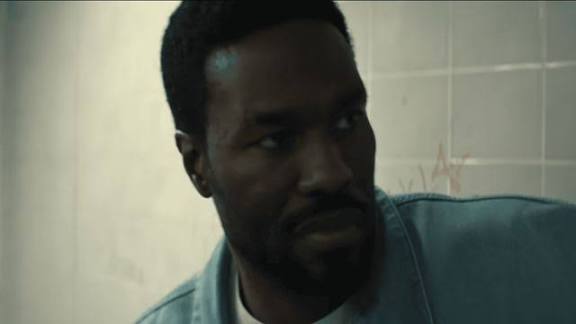
This ending reframes the entire series. What initially felt like a meta-commentary on Hollywood and superhero branding reveals itself as a deeply human story about self-worth. The catharsis doesn’t come from watching Simon become something bigger, but from watching him finally accept being enough.
Similar emotionally driven finales can be found in Marvel’s recent streaming experiments, many of which have been critically analysed by outlets like hollywoodreporter
In a franchise often criticized for emotional shortcuts, Wonder Man Finale Explained takes the long road. The finale rewards patience, attention, and empathy. It Wonder Man Finale Explained trusts the audience to sit with complexity rather than demand fireworks. And that trust pays off.
For a series that avoids typical spectacle, Wonder Man stands apart from other Marvel shows released on Disney+, as seen across recent projects discussed on marvel
By the time the screen fades to black, there’s no rush to applaud or gasp. Wonder Man Finale Explaineda quiet sense of understanding — the feeling that you’ve watched someone finally step out of a shadow that was never really theirs to begin with. That kind of catharsis can’t be manufactured. It has to be felt.
For More News updates : https://asiapedia.in