
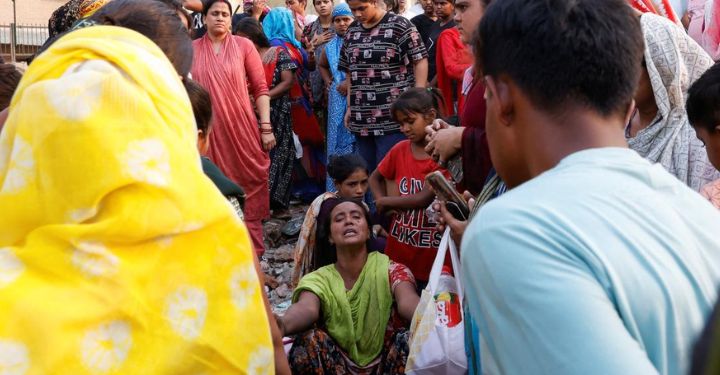
Chief Minister Rekha Gupta has called for a paradigm shift in how Delhi—and India—thinks about its urban poor, following the deadly fire that destroyed over 800 jhuggis and claimed the lives of two children in Rohini. She urged policy-makers, planners, and citizens alike to “humanize urban development” and build cities that protect and uplift the most vulnerable.
Speaking during her visit to the fire-ravaged area, Gupta’s tone combined empathy with determination. “Every time we ignore unsafe housing, every time we delay infrastructure to these communities, we’re gambling with human lives,” she stated. “That must stop now.”
Emergency Response and Ongoing Support
The Delhi government immediately mobilized a comprehensive emergency response:
- Relief camps were set up in nearby school buildings.
- Community kitchens were established, serving over 15,000 meals daily.
- Mobile medical vans and trauma counselors were stationed to support affected residents.
- Special education teams were dispatched to help children resume learning.
Additionally, the CM announced the creation of a special “Urban Vulnerability Fund” to assist low-income neighborhoods during crises. This fund, with an initial corpus of ₹200 crore, will be used to upgrade infrastructure, run safety awareness campaigns, and enhance disaster preparedness.
“Where There Are Jhuggis, There Will Be Homes”
Gupta reiterated her administration’s commitment to in-situ development rather than forced evictions or relocation. “These families are part of Delhi’s social and economic fabric. We will build homes where their jhuggis stood—not force them out of the city,” she said.
The Pradhan Mantri Awas Yojana (PMAY)-linked housing projects in slum areas, already underway, will be accelerated. Gupta promised that all eligible residents of the Rohini cluster will receive permanent housing within the next 18 months.
She also called on the Centre to extend additional funds for rehabilitation and urban safety improvements, emphasizing that this must become a joint mission between state and central governments.
A Broader Dialogue on Equity
What sets Gupta’s response apart is her broader framing of the issue—not merely as a disaster, but as a moral reckoning for urban India. “We must ask ourselves—why do we wait for tragedy to recognize people’s rights to safety and dignity?” she posed during a policy roundtable convened hours after the visit.
She proposed the inclusion of “housing equity and disaster protection” as a core mandate in all city master plans moving forward. In her words, “Real development is not glass buildings—it’s when every citizen, rich or poor, can sleep safely at night.”
Media and Civil Society Reactions
Civil society groups and media commentators have welcomed Gupta’s “rights-first” approach. “It’s rare for leaders to directly name the systemic failures behind such tragedies. Gupta is showing political courage and moral clarity,” said Anupama Sen, a housing activist.
Newspapers across the capital have praised her leadership style, contrasting it with past administrations that often treated jhuggi fires as unfortunate, but routine.
Long-Term Structural Solutions
The government has now begun work on a “Delhi Slum Atlas,” a GIS-based mapping tool that identifies high-risk zones for fire, flooding, and disease outbreaks. This digital tool will guide policy decisions and help prioritize infrastructure upgrades.
Gupta also plans to institutionalize a quarterly safety drill system across all DUSIB-registered clusters, supported by school-based awareness programs for children.
Looking Ahead
The Rohini fire was a tragedy—but it may also become a catalyst. Rekha Gupta’s vision of humanizing urban development, supported by structural policy change and inclusive governance, is now under national scrutiny.
She ended her visit to the Rohini relief site with a promise: “This fire destroyed homes, but it will light the path to a better, fairer Delhi. We owe it to those we lost—and to those still here.”
For More News updates : https://asiapedia.in