
In the vast landscape of Indian digital cinema, few films manage to capture the chilling silence of rural darkness as effectively as Honey Trehan’s directorial debut. Our Raat Akeli Hai movie review dives deep into this atmospheric neo-noir that uses a traditional murder mystery as a Trojan horse to examine the rot within the Indian patriarchal structure.

The Haunting Echoes of the Bansal Murders
The film opens with a sequence that sets a somber, brooding tone. A wealthy patriarch is murdered on the very night of his wedding. The victim? Raghubeer Singh, the head of the powerful Bansal family. The location? A sprawling, shadow-filled haveli in Gwalior that feels more like a prison than a home.
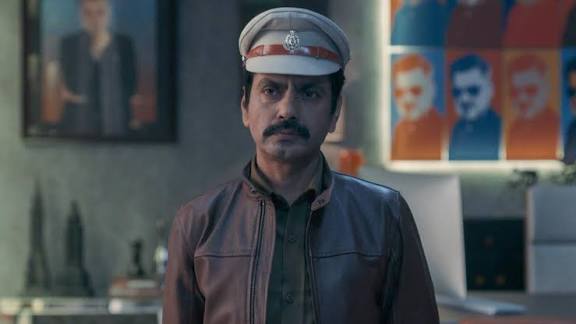
Enter Inspector Jatil Yadav, portrayed by the incomparable Nawazuddin Siddiqui. Jatil is not your typical cinematic “super-cop.” He is a man battling his own internal demons—his obsession with fairness creams, his search for a “homely” wife, and his desperate need for professional validation. As he begins investigating the Raat Akeli Hai movie review of the crime, he realizes that the walls of the Bansal mansion hide secrets far more sinister than a simple homicide.

A Symphony of Performances
What elevates this film to a world-class level is its impeccable casting. Nawazuddin Siddiqui delivers a performance of remarkable restraint. He uses his eyes to convey the exhaustion of a man who realizes that the law he serves is often a puppet for the powerful.
Opposite him is Radhika Apte as Radha, the “outsider” bride who becomes the primary suspect. Apte brings a haunting vulnerability to Radha, making us wonder if she is a cold-blooded killer or a victim of extreme circumstances. The supporting ensemble—featuring Shweta Tripathi, Tigmanshu Dhulia, and Ila Arun—creates a believable, suffocating environment where every glance is suspicious and every silence is a lie.
Deconstructing the Layers: Beyond the “Whodunit”
A truly great Raat Akeli Hai movie review must acknowledge that the film’s strength lies in its subtext. While the plot follows the footprints of Agatha Christie, the soul of the movie belongs to the gritty realism of Indian society.

1. The Toxicity of Entitlement
The Bansal family represents a specific kind of feudal entitlement. The men believe they own the women, the land, and even the truth. The murder investigation acts as a mirror, reflecting how wealth allows families to bury their darkest sins under the guise of “honor.”
2. The Noir Aesthetic and Visual Storytelling
Cinematographer Pankaj Kumar transforms the Gwalior landscape into a character of its own. The heavy use of shadows, the flickering yellow lights, and the damp, rainy atmosphere pay homage to classic film noir while remaining rooted in the dusty heartland of India.
Technical Excellence and Global Appeal
For those looking for a fast-paced action thriller, Raat Akeli Hai might feel like a slow burn. However, for the discerning viewer, the deliberate pacing is a reward. It allows the tension to simmer, making the final reveal both shocking and heartbreaking.
If you are interested in the behind-the-scenes evolution of such gritty dramas, you can explore more on the official Netflix YouTube channel or read about the evolution of Indian Noir on Film Companion.
Conclusion: Why This Film Matters
To conclude this Raat Akeli Hai movie review, Honey Trehan has crafted a film that stays with you long after the credits roll. It is a haunting reminder that in the search for justice, the truth is often buried under layers of social status and family pride. It is easily one of the most sophisticated thrillers to emerge from India in recent years.
For More News updates : https://asiapedia.in