
India’s geography does not stay still. It changes with seasons, and much of that movement is driven by work.
Across the country, certain occupations operate on a seasonal rhythm, pulling people from one region to another for months at a time. These workers do not travel for leisure, yet their movement reshapes landscapes, transport networks, and local cultures in subtle ways.
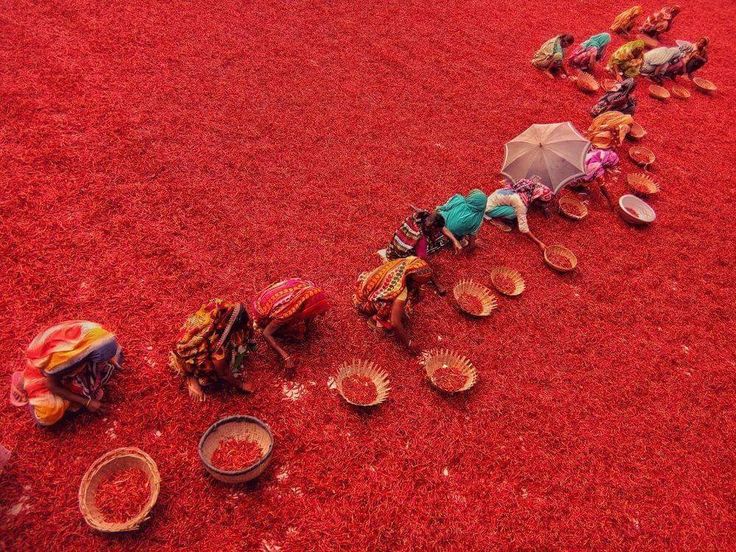
Agricultural cycles are the most visible example. Harvest seasons draw labourers across state borders, temporarily altering the population of rural regions. Sugarcane cutting, rice transplantation, and cotton picking create seasonal corridors of movement. Entire families relocate for work, carrying daily routines into unfamiliar environments.
In the hills, apple grading and fruit harvesting attract workers during specific months. Small towns expand suddenly, with rented rooms, shared kitchens, and informal markets appearing to support the influx. When the season ends, these spaces contract again, leaving behind only traces of temporary habitation.
Brick kiln labour follows a similar pattern. Workers move to kilns during dry months and return home once the monsoon arrives. These settlements exist outside formal city boundaries, forming parallel communities governed by work schedules rather than civic systems.
Religious institutions also rely on seasonal labour. Temple kitchens, pilgrimage management teams, and festival organisers recruit workers for specific periods. These roles involve travel, discipline, and routine, blurring the line between work and devotion.
Election seasons create another temporary geography. Polling staff, security forces, and administrators travel across districts and states, occupying schools, hostels, and government buildings. For a brief period, entire regions transform into operational zones shaped by civic duty.
From a travel lens, following these occupations reveals an India structured by necessity rather than tourism. Routes are chosen based on contracts, crops, and construction timelines. Transport hubs adapt to seasonal surges, while towns quietly absorb and release populations.
Lifestyle-wise, seasonal workers develop flexible identities. Home becomes something carried rather than fixed. Belonging is distributed across multiple places, each associated with a specific time and role. These occupational migrations challenge static ideas of settlement and citizenship. They show that for many Indians, movement is not a choice but a rhythm, a way of aligning life with opportunity.
India’s map is not redrawn by borders or cities alone. It is rewritten every season by work.
For More News updates : https://asiapedia.in