
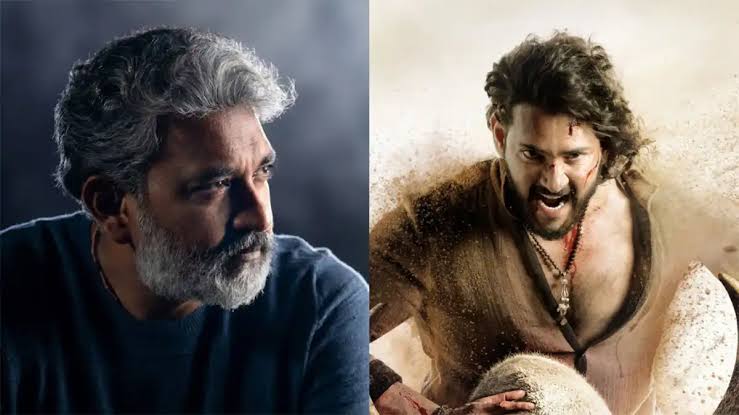
SS Rajamouli is not a filmmaker who rushes through moments that matter. When he commits to a vision, he allows it to breathe, evolve, and take shape at its own pace — even if that means spending two full months filming a single 25-minute sequence. One such moment, now being spoken about in hushed admiration within industry circles, is a Ramayana-inspired sequence shot in Varanasi, where Rajamouli reportedly took 60 days to capture what eventually became just 25 minutes on screen. And at the heart of it all stood Mahesh Babu, in a portrayal that left even the director himself with goosebumps.
According to sources close to the production, this sequence was not just another elaborate set piece. It was conceived as an emotionally and spiritually pivotal moment, demanding absolute authenticity — in performance, visuals, and atmosphere. Rajamouli, known for his obsessive attention to detail, was clear that this portion of the film could not feel staged or theatrical. It had to feel lived-in, sacred, and timeless.
Choosing Varanasi was not accidental. The ancient city, with its ghats, chants, narrow lanes, and spiritual rhythm, offered something that no studio set could replicate. However, filming there came with its own set of challenges. Crowds, unpredictable weather, river conditions, and the sheer complexity of coordinating large-scale shoots in a living, breathing city meant progress was slow. But Rajamouli was in no hurry.
Insiders say the director approached the sequence almost like a meditation. Each shot was rehearsed extensively. Lighting was adjusted repeatedly to match the natural glow of dawn and dusk along the Ganges. Background activity was carefully curated to blend seamlessly with real life, rather than overpower it. The idea was simple yet ambitious: when audiences watch this sequence, they should feel like they are witnessing a moment from another era, unfolding naturally before their eyes.
Mahesh Babu’s presence was reportedly central to why Rajamouli chose to slow things down. The actor, known for his controlled performances and calm screen persona, was tasked with embodying a character inspired by Lord Rama — a figure deeply rooted in Indian cultural consciousness. Rajamouli was aware that even the slightest exaggeration could break the illusion. As a result, Mahesh Babu was guided to internalize the character rather than perform it.
Those present on set describe Mahesh Babu’s transformation as subtle but powerful. There were no grand gestures or dramatic dialogues dominating the sequence. Instead, it was his stillness, his gaze, and the way he moved through the frame that left an impact. One crew member reportedly mentioned that during certain takes, the entire set would fall silent — not because Rajamouli demanded it, but because no one wanted to disturb the moment.
Rajamouli himself is said to have admitted that seeing Mahesh Babu in costume, walking through the ghats at sunrise, gave him literal goosebumps. It wasn’t just the visual resemblance or the costume design, but the way the actor carried himself — with restraint, dignity, and quiet strength. For a director who has staged some of Indian cinema’s most bombastic action sequences, this understated emotional high point stood out as something deeply personal.
Spending 60 days on a 25-minute sequence might sound excessive in an industry driven by tight schedules and mounting budgets. But for Rajamouli, time has always been an investment, not a cost. His previous films have repeatedly shown that audiences respond to sincerity and scale when they are backed by patience and conviction. This sequence, by all accounts, was treated as the soul of the film rather than just another chapter.
The shoot also demanded intense coordination between departments. Costume designers had to ensure authenticity without making the visuals feel heavy. Cinematographers worked with natural light far more than artificial setups. Sound designers captured ambient noises from the ghats — temple bells, flowing water, distant chants — to preserve the city’s organic soundscape. Nothing was rushed. Nothing was compromised.
What makes this story even more intriguing is how little of it has been officially publicized. There were no loud announcements, no behind-the-scenes videos released immediately, and no attempt to market the effort while it was happening. Rajamouli reportedly wanted the work to speak for itself when the film finally reaches audiences.
For Mahesh Babu, this sequence could mark a defining moment in his career. While he has played a wide range of roles over the years, stepping into a character inspired by Rama under Rajamouli’s direction places him in entirely new territory. Industry watchers believe this portrayal could reshape how audiences perceive him, not just as a star, but as a performer capable of deep spiritual resonance.
As anticipation around Rajamouli’s upcoming projects continues to grow, stories like these remind us why his films generate such massive expectations. They are not built overnight. They are carved slowly, shot by shot, emotion by emotion.
If spending 60 days for 25 minutes results in a sequence that lingers in viewers’ minds long after the credits roll, Rajamouli would likely say it was time well spent. And if the quiet reactions from those who witnessed Mahesh Babu as Rama are anything to go by, audiences may soon understand exactly why the director walked away from that Varanasi shoot with goosebumps.
For More News updates : https://asiapedia.in