
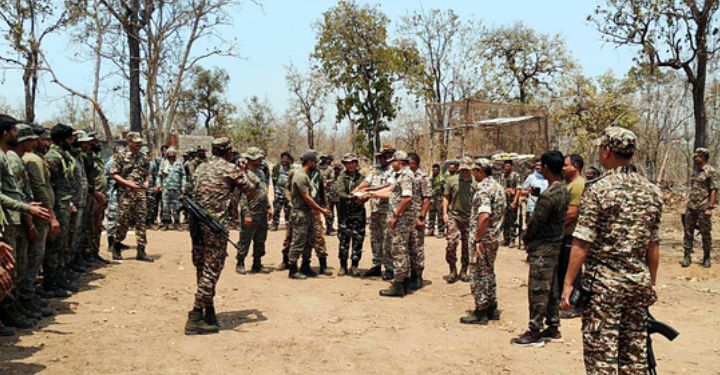
This article would focus on the strategic success of the counterinsurgency operation in Chhattisgarh’s Bijapur and Kanker districts, where security forces killed 30 Maoist insurgents. It would start by providing the background of the operation, describing how security forces received intelligence about Maoist movements in these areas. It would then delve into the specifics of the operation, detailing how the forces were able to launch a precise, coordinated attack on the Maoists, resulting in significant casualties on the rebel side.
The article would analyze the different tactics and strategies used by the security forces during the operation, with a focus on the role of specialized units like the CRPF (Central Reserve Police Force). It would explore the challenges posed by the region’s dense forests, mountainous terrain, and unpredictable weather, all of which made the operation difficult. There would be a section dedicated to the role of modern technologies, such as drones and satellite surveillance, which have increasingly been utilized by security forces to monitor Maoist movements and plan targeted strikes.
Impact on the Maoist Insurgency: The article would explore how this operation fits into the larger context of the Maoist insurgency in Chhattisgarh. Despite the success of this operation, experts would argue that the insurgency is deeply entrenched and that such successes alone may not completely dismantle Maoist networks in the region. The piece would include perspectives from security analysts and former insurgents who would discuss the resilience of Maoist forces, which often regenerate quickly by recruiting new militants from local tribal communities.
The article would also highlight how such encounters affect local communities. Often, civilians are caught between the crossfire of Maoist militants and security forces. It would address the challenges that both the state and the insurgents face when trying to win the hearts and minds of the local population, many of whom have legitimate grievances, including poverty and lack of development.
Challenges for Development and Governance: A significant portion of the article would explore the socio-economic conditions in Chhattisgarh and how they contribute to the persistence of the insurgency. The state’s development policies, land rights issues, and the marginalization of tribal communities would be examined in detail. The article would discuss how, while security measures are crucial, addressing the root causes of the insurgency—such as poverty, unemployment, and lack of infrastructure—will be essential for long-term peace.
The conclusion would emphasize that while military successes like this operation are important, they must be accompanied by a broader strategy that includes development, governance reforms, and the engagement of local communities in the peace process. Only by addressing both the security and socio-economic challenges can Chhattisgarh hope to achieve lasting peace.
For More News updates : https://asiapedia.in