
New Delhi, May 2, 2025 –
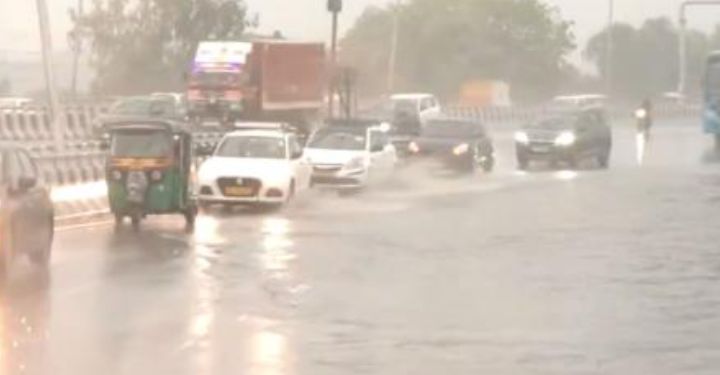
A powerful dust storm accompanied by intense rainfall and gale-force winds tore through Delhi and the National Capital Region (NCR) on Thursday, claiming four lives and causing widespread disruption to air, road, and metro services. As emergency services rushed to clear fallen trees, restore power, and support affected communities, the city faced a sobering reminder of its vulnerability to extreme weather.
Fatalities: Storm Claims Four Lives in Separate Incidents
The Delhi Police and municipal officials confirmed four storm-related deaths. In East Delhi’s Pandav Nagar, a 56-year-old woman lost her life after a tree branch, weakened by high winds, fell on her as she returned home from the market. Eyewitnesses said there was no time to react as the wind intensified suddenly.
In another tragic incident, a teenage boy, aged 19, was fatally injured when debris from a dilapidated building wall fell on him in South Delhi’s Jaitpur area. “The wall collapsed with a loud crash just as the wind picked up,” said a local resident. Two others sustained injuries nearby.
The most devastating event occurred in the Yamuna Khadar area, where a massive tree fell onto a temporary shelter, instantly killing three members of a family—a man, woman, and their child. A fourth family member is currently hospitalized in critical condition.
Storm Intensity and Weather Patterns
According to the India Meteorological Department (IMD), the storm was driven by a strong western disturbance colliding with local heat and moisture conditions. Wind speeds reached up to 100 kilometers per hour in some parts of the capital, and the storm brought torrential rain and a significant temperature drop.
“The temperature dropped from a sweltering 40.6°C to 25.2°C in less than an hour, indicating the severity of the system,” said IMD senior official R.K. Jenamani. “This was one of the most intense pre-monsoon weather events in recent years.”
Lightning activity was also widespread, with multiple strikes reported on buildings, poles, and open grounds. Fortunately, no major lightning-related injuries were reported.
Chaos at the Airport: Over 200 Flights Delayed or Diverted
Indira Gandhi International Airport, one of the busiest in the country, was heavily impacted by the storm. More than 200 flights faced delays, and several had to be diverted to alternate airports, including Jaipur and Chandigarh, due to poor visibility and high wind shear.
Passengers described scenes of confusion inside terminals, as monitors displayed continuous delay updates and airline staff struggled to manage rescheduling. “We were inside the aircraft for over an hour before take-off was finally cancelled,” said Kavita Nair, a business traveler en route to Mumbai.
Airport authorities deployed emergency crews to secure loose equipment and assist stranded passengers, and operations resumed gradually post-midnight.
Metro and Surface Transport in Disarray
The Delhi Metro Rail Corporation (DMRC) temporarily suspended services on several lines, including the Blue and Violet Lines, due to fallen trees and electrical issues. Overhead wires were damaged in multiple locations, halting trains and trapping hundreds of commuters on platforms.
Though services were restored within two to three hours, the damage had already caused a ripple effect across the city’s public transport system. Metro commuters were forced to take buses or app-based taxis, most of which faced massive delays due to traffic congestion and flooded roads.
Power Disruptions and Infrastructure Damage
Numerous neighborhoods, particularly in South and Central Delhi, experienced prolonged power outages as electric poles were snapped and transformers were damaged. Areas like Lajpat Nagar, Greater Kailash, Rohini, and Janakpuri were among the worst affected.
The city’s municipal corporations received over 400 emergency calls related to uprooted trees, broken power lines, and damaged streetlights. In some residential colonies, falling trees crushed parked vehicles and blocked entire lanes.
“We were without electricity for six hours, and there was water seepage into our basement because the storm drains were clogged,” said Mehul Arora, a resident of South Extension.
Emergency Response and Clean-Up Efforts
Municipal workers, fire department personnel, and civil defense volunteers were deployed overnight to clear roads, repair infrastructure, and assist in rescue operations. The Delhi Fire Service reported more than 150 storm-related calls between 6 PM and midnight.
Delhi Lieutenant Governor Vinai Kumar Saxena conducted an aerial survey of the city on Friday morning and held a high-level review meeting with municipal officials. He urged the departments to expedite clean-up efforts and ensure public safety.
Chief Minister Rekha Gupta also expressed grief over the loss of lives and announced financial assistance to the families of the deceased under the city’s disaster relief fund. “We are facing increasingly unpredictable weather events, and our preparedness must evolve accordingly,” she said.
Climate Implications and Urban Challenges
Experts believe the increasing frequency of such storms is consistent with global patterns of climate instability. “Urban heat islands, deforestation, and poor planning are intensifying the impact of natural weather events in cities like Delhi,” said Dr. Arvind Saxena, a climate policy advisor at TERI (The Energy and Resources Institute).
Environmentalists have also pointed out the lack of tree audits and risk assessments in the city. “Most of the trees that fell were either diseased, planted too close to roads, or not maintained,” said Pooja Bansal, an urban ecologist.
This storm comes on the heels of similar extreme weather events across northern and eastern India in April, which killed dozens and affected thousands.
Public Reaction and Calls for Preparedness
Citizens took to social media to share videos of hailstorms, fallen signboards, crushed vehicles, and blocked roads. Many also questioned why more robust alerts or warnings were not issued earlier by the IMD or local agencies.
“I got no SMS or public warning before the storm hit. This is the capital city — we need better forecasting and more proactive communication,” tweeted one user.
In response, Delhi Disaster Management Authority (DDMA) promised to review its emergency alert systems and improve public messaging ahead of future weather anomalies.
For More News updates : https://asiapedia.in