
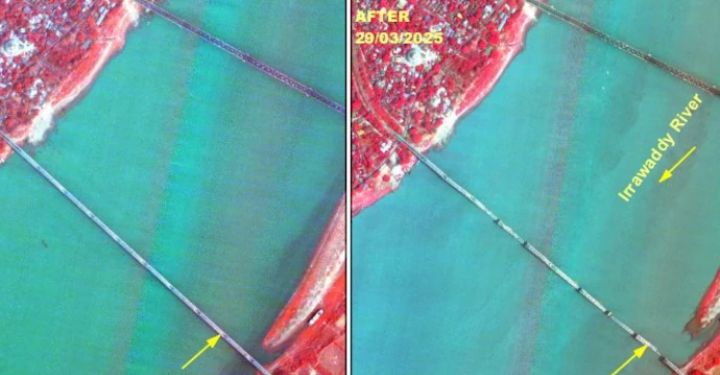
Myanmar was struck by a powerful earthquake of magnitude 7.8, which left a trail of devastation across central and northern regions of the country. In the aftermath, the Indian Space Research Organisation (ISRO) swiftly deployed its satellite technology to capture high-resolution images that would provide crucial data for recovery operations.
Using advanced satellites such as Cartosat-2, ISRO captured detailed images of affected urban and rural areas, showing extensive damage to buildings, roads, and essential infrastructure. These satellite images have been crucial in helping the Myanmar government and aid organizations determine the full extent of the damage and organize relief efforts.
Key Observations:
- Urban devastation: Satellite images show that the destruction in major urban centers like Naypyidaw and Mandalay was significant. Whole neighborhoods have been leveled, with collapsed buildings and damaged roads, leaving families displaced and in urgent need of help.
- Rural impact: Many rural villages were also severely impacted, with homes reduced to rubble and agriculture suffering due to damaged irrigation systems. ISRO’s satellite imagery highlighted these areas, ensuring that aid efforts are distributed across both urban and rural locations.
Satellite Data Utilization:
ISRO’s satellite data has proven vital in mapping out the most affected regions. The imagery also showed areas that were otherwise difficult to reach, such as those affected by landslides, helping guide emergency rescue teams to the hardest-hit spots.
For More News updates : https://asiapedia.in