
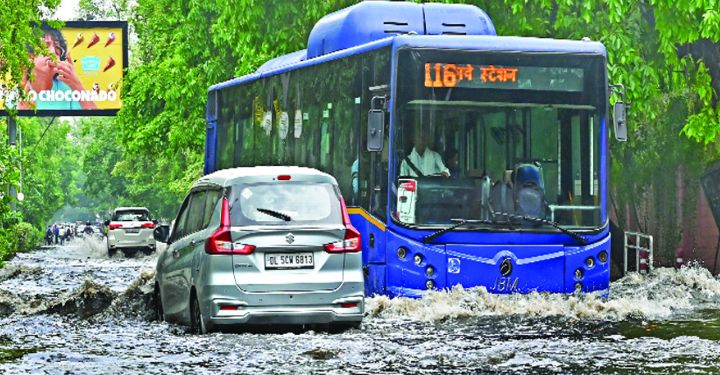
As midnight approached on May 24, Delhi and the surrounding NCR region were jolted awake by a violent thunderstorm that swept across the city. For several hours, high-speed winds, torrential rain, and streaks of lightning battered the national capital, leaving behind scenes of chaos—uprooted trees, damaged buildings, disrupted flights, and tragic fatalities.
Though the India Meteorological Department (IMD) had issued a red alert earlier in the day, the scale and swiftness of the storm took many by surprise. The storm exposed critical vulnerabilities in the city’s infrastructure and emergency response, raising alarms about Delhi’s preparedness for extreme weather.
Air Travel in Turmoil: Nearly 50 Flights Diverted
Indira Gandhi International Airport bore the brunt of the storm’s wrath. Strong winds, reduced visibility, and heavy downpours forced air traffic control to divert 49 flights to alternative airports, including Jaipur, Lucknow, and Ahmedabad. Hundreds of passengers were left stranded inside aircraft or waiting lounges, with minimal information provided by airline staff.
According to a statement from the Delhi International Airport Limited (DIAL), flight operations had to be halted for safety reasons, especially with wind speeds crossing 60 kmph. Delays continued through Saturday morning as the backlog took time to clear.
Adding to the disruption, part of a metallic canopy at Terminal 3 collapsed under pressure from the wind. Although no injuries were reported, the incident sparked concern about the resilience of even modern infrastructure at key transportation hubs.
City Streets Turn Into Rivers
Across the city, the storm left roads waterlogged and traffic immobilized. Key intersections such as Minto Bridge, South Extension, and Ashram Chowk were submerged, resulting in long snarls and vehicle breakdowns. Underpasses, notorious for flooding during monsoon season, were completely filled with water—making them impassable.
Municipal teams worked through the night with water pumps and clearing equipment. However, in many residential areas, help came late. South Delhi’s Kailash Colony, East Delhi’s Preet Vihar, and parts of West Delhi reported standing water that entered homes, damaging property.
Residents, once again, questioned why annual monsoon preparedness plans seem to fail year after year. “Every year we see the same situation. Drain cleaning begins too late or not at all,” said Nandita Sharma, a resident of Lajpat Nagar.
Lives Lost in Dwarka Incident
Perhaps the most tragic event occurred in Dwarka’s Kharkhari village, where four people lost their lives after a large tree collapsed on a tubewell shed they had taken shelter in. A fifth person sustained injuries and is currently undergoing treatment.
Firefighters and local police responded quickly, but the force of the fallen tree had already caused fatal damage. The incident highlighted the hazards posed by old, unstable trees in storm-prone urban areas—especially those growing near informal structures or shelters.
Widespread Power Outages and Service Disruptions
As the storm raged, power grids in several neighborhoods failed. Residents in parts of Jangpura, Laxmi Nagar, and Dwarka were left without electricity for up to 10 hours. In some locations, power poles and transformers suffered direct hits from lightning or collapsing trees.
Internet connectivity and phone signals were also briefly interrupted, especially in South and East Delhi, as telecom towers struggled under the weather pressure. Civic officials stated that repair teams were deployed immediately, but full restoration was expected to take time due to the extensive nature of the damage.
Storm Forecast and Climate Warnings
The IMD had warned earlier of the possibility of “severe thunderstorm activity with gusty winds and isolated hail.” In a post-event briefing, IMD officials said the storm’s intensity was within expected parameters but noted that the urban impact was unusually widespread. They also suggested that pre-monsoon thunderstorms may become more intense due to changing climate patterns.
“This is not a one-off event,” said Dr. Rajeev M., a climate expert. “Delhi is seeing increasingly frequent and intense storms. What used to be rare now occurs with increasing regularity. Urban planning must reflect this change.”
For More News updates : https://asiapedia.in