
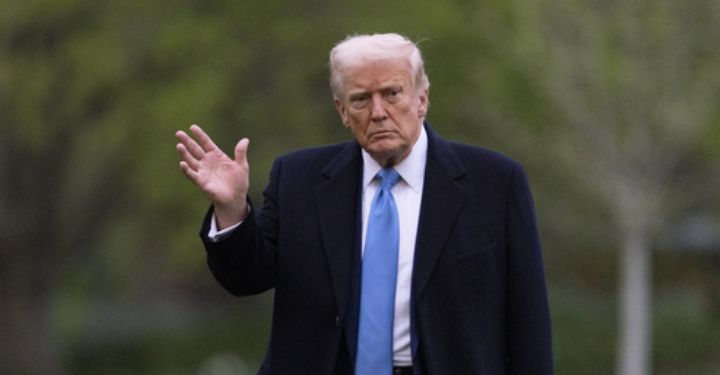
Former President Donald Trump’s stance on tariffs remains unshaken, despite the mounting economic challenges and uncertainties that have plagued global markets in recent times. From supply chain disruptions to rising inflation, the world economy is facing serious turbulence. However, Trump remains adamant that his tariff policies are not only essential but will eventually yield significant long-term benefits for the American economy.
Trump’s trade policies, particularly the tariffs he imposed on foreign goods, were at the forefront of his “America First” economic agenda. His administration argued that these tariffs would restore fairness to the U.S. economy by addressing long-standing trade imbalances, particularly with China. Although these tariffs have been contentious—leading to higher prices for consumers and retaliatory measures from other nations—Trump has consistently defended his approach, framing it as a necessary step to protect U.S. industries and jobs.
The Impact of Tariffs on Domestic Industry
One of the key reasons Trump championed tariffs during his presidency was his belief that the U.S. had been taken advantage of by other countries, particularly China. U.S. manufacturers, Trump argued, were facing an unfair playing field, as foreign governments subsidized their industries and engaged in trade practices that undercut American businesses.
By imposing tariffs on foreign imports, Trump sought to level the playing field. The idea was that higher prices on imported goods would encourage U.S. consumers and companies to buy more domestically produced products. This would, in theory, lead to job creation in sectors like steel, aluminum, and manufacturing.
The early results of these policies were mixed. Some U.S. industries, particularly steel producers, saw an uptick in business as foreign competition was reduced. However, other sectors—especially those dependent on imported materials and goods—faced increased costs. For example, the automotive and electronics industries struggled with higher input prices due to tariffs on imported parts.
Despite these challenges, Trump has remained unwavering in his belief that the tariffs will ultimately benefit the U.S. economy in the long term. By reducing reliance on foreign manufacturing and encouraging domestic production, Trump believes that the U.S. will regain its manufacturing prowess and strengthen its economic standing in the global market.
The Global Trade War and Its Aftermath
The U.S.-China trade war, which began during Trump’s presidency, was one of the most significant and contentious trade disputes in recent history. Trump’s administration imposed tariffs on billions of dollars worth of Chinese goods, citing issues such as intellectual property theft, currency manipulation, and unfair subsidies to Chinese companies. In response, China retaliated with tariffs of its own, targeting U.S. agricultural exports and other goods.
The trade war resulted in a dramatic shift in global trade dynamics, with both the U.S. and China feeling the impact of the tariffs. U.S. farmers, for instance, saw a significant drop in exports to China, particularly soybeans and pork. This created a strain on the agricultural sector, with farmers facing lower profits and in some cases, bankruptcy.
Despite the negative consequences for certain industries, Trump has continued to defend his tariff policies. He argues that the trade war was necessary to force China to address its unfair trade practices, and that the U.S. had been losing out in trade deals for far too long. For Trump, the pain felt in the short term is worth it if it leads to a more equitable trade relationship in the future.
Inflation and Consumer Prices: The Double-Edged Sword
One of the most significant criticisms of Trump’s tariff policies has been their impact on consumer prices. As tariffs raised the cost of imported goods, retailers passed on these increased costs to consumers. This resulted in higher prices for everything from electronics to clothing, leading to inflationary pressures that have been particularly noticeable in recent years.
Trump has acknowledged the impact of higher consumer prices but has maintained that the long-term benefits of tariffs outweigh these short-term costs. In his view, reducing reliance on foreign goods and encouraging domestic production will ultimately strengthen the U.S. economy and create jobs. Additionally, he believes that the tariffs will compel foreign countries to negotiate better trade deals, benefiting American businesses in the long run.
Navigating Economic Uncertainty
As global markets continue to experience instability, the future of Trump’s tariff policies remains uncertain. The COVID-19 pandemic, the war in Ukraine, and ongoing supply chain disruptions have all contributed to a more volatile economic environment. Despite these challenges, Trump’s confidence in his tariff strategy persists.
In recent statements, Trump emphasized that while the future of the economy is unpredictable, his tariffs were necessary to address systemic trade issues. “The future is always uncertain,” he said, “but we have to make tough decisions today for a better tomorrow.” His commitment to tariffs reflects his broader belief that America must prioritize its own economic interests and reduce its dependence on foreign countries.
Looking forward, it is unclear whether the U.S. will continue with Trump’s tariff strategy or whether future administrations will seek to reverse or modify these policies. What is certain, however, is that Trump’s tariffs have left a lasting imprint on U.S. trade policy and will continue to shape the conversation around global trade for years to come.
For More News updates : https://asiapedia.in