
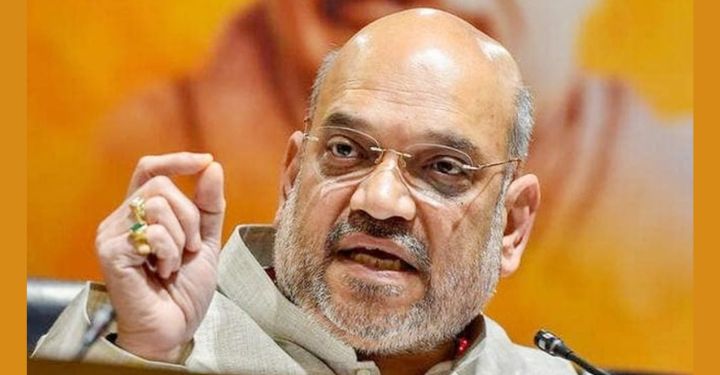
Union Home Minister Amit Shah has reiterated the central government’s unwavering commitment to restoring the statehood of Jammu and Kashmir, responding to growing demands from political leaders and residents of the region. His recent statement reassured the people of Jammu and Kashmir that the government intends to follow through on the promise made after the revocation of Article 370 in August 2019, which led to the reorganization of the state into two Union Territories — Jammu and Kashmir, and Ladakh.
The revocation of Article 370 was one of the most significant and controversial moves of the Modi government, with critics arguing that it undermined the region’s special status and autonomy. In the aftermath, Jammu and Kashmir faced a period of uncertainty, with a heavy security presence and the suspension of local political leaders. However, Amit Shah’s latest comments suggest that the government is now focused on returning the region to its former status as a state within the Indian Union, albeit with certain conditions.
Shah’s Assurance to Jammu and Kashmir
Amit Shah addressed the concerns of regional political leaders who have been vocal about the need for the restoration of statehood. The statement is seen as a positive sign that the government is actively working to fulfill its promise and not abandoning the people of Jammu and Kashmir. Shah emphasized that the timeline for the restoration of statehood would depend on the ongoing security situation in the region, but he reassured stakeholders that the government was prioritizing peace and development in the region.
While several political leaders, such as Farooq Abdullah and Mehbooba Mufti, have repeatedly called for the restoration of statehood, some members of the BJP have voiced concerns over reinstating statehood too quickly. They argue that the security situation must be fully stabilized before any political moves are made.
What Does the Promise Mean for Jammu and Kashmir?
The promise of statehood restoration is crucial for many in Jammu and Kashmir, as it symbolizes the return of political rights, governance autonomy, and local empowerment. The stripping of the statehood in 2019 led to widespread protests and a feeling of disenfranchisement among the residents. The statehood issue is tied to the broader debate on Jammu and Kashmir’s integration with the rest of India, and many believe that restoring statehood is a necessary step toward addressing longstanding grievances.
Shah’s statement also emphasized the government’s commitment to ensuring that Jammu and Kashmir’s political future aligns with the rest of the nation. As the region continues to heal from its tumultuous past, the restoration of statehood could signal the beginning of a new chapter in its governance, offering more powers to local leaders to drive political, social, and economic development.
Challenges Ahead for the Restoration Process
The restoration of Jammu and Kashmir’s statehood is not likely to be immediate, as the government will need to carefully assess the security situation and ensure that local institutions are ready for the re-establishment of full autonomy. The security concerns that have plagued the region in the past must be addressed first, as they continue to pose challenges to both the region’s governance and its peaceful integration into India.
Additionally, the political landscape of Jammu and Kashmir has changed significantly since the revocation of Article 370, with the consolidation of power under the central government. The future of the region’s statehood will involve carefully navigating these political changes and ensuring that all local stakeholders are included in the discussions.
For More News updates : https://asiapedia.in